
Agustín Gómez, the Torpedo Moscow captain who played a friendly for Atlético de Madrid and became a Soviet spy
Born in Rentería in 1922, he left Spain at 15 in a wartime children's evacuation and went on to captain Torpedo Moscow. In 1956 he returned to Spain and Atlético de Madrid gave him a chance in a friendly against Fortuna Düsseldorf. His communist militancy and work as a Soviet agent shaped the rest of his life.
 Byvarela7 min read
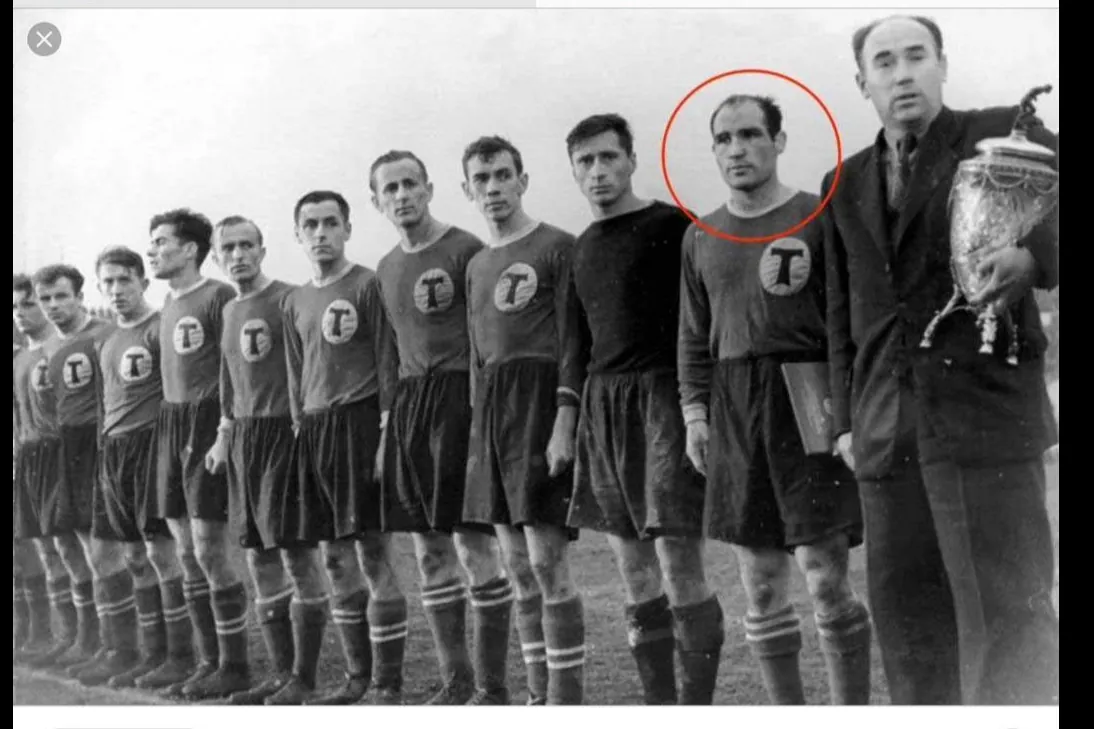
Agustín Gómez Pagola, born in Rentería in 1922, went from being a child evacuated to the Soviet Union during the Spanish Civil War to captaining Torpedo Moscow and, decades later, earning a trial with Atlético de Madrid in a friendly match. His football career was overshadowed by a double life as a communist militant and agent serving Moscow, which ended with his arrest in 1961. The research of Miguel Bas, himself the son of war children, reconstructs a story that links football, exile and espionage at the height of the Cold War.
- Agustín Gómez left Rentería in 1937 with two siblings and another 1,466 children bound for a centre 100 kilometres from Moscow.
- He played for Torpedo Moscow between 1947 and 1956, captained the side and was named the Soviet league's best player in 1952.
- In December 1956 he played a friendly for Atlético de Madrid against Fortuna Düsseldorf, aged 34 and with only four training sessions behind him.
- He joined the Spanish Communist Party in 1946 and the Soviet Communist Party in 1948, and his wife only learned of his clandestine work after his arrest.
- In February 1961 he was detained and spent 59 days in Carabanchel prison, 47 of them in isolation.
From Rentería to the USSR: the 1937 evacuation
The Spanish Civil War swept Agustín Gómez away from Gipuzkoa at the age of 15. In 1937 he boarded a ship with two siblings and another 1,466 children as part of one of the expeditions organised to the Soviet Union. Their destination was Obninskoye, 100 kilometres from Moscow, where the children grew up in exile.
During that period, the centre received a visit from the Basque national team, which was touring the USSR. The contact with football proved anything but trivial: Gómez soon began a career that took him to Krylia Sovietov, the team of the factory that would produce the first Soviet jet fighters. There he met Ruperto Sagasti, who years later would act as an interpreter in the first football contacts between Spain and the Soviet Union.
Torpedo Moscow captain and the Soviet league's best player
Krylia Sovietov won promotion to the top flight and was soon disbanded. Its players were shared between Moscow's two major clubs: Spartak and Torpedo. Gómez ended up at Torpedo, where he played from 1947 to 1956 and took over the captaincy from his fourth season.
As a defender he stood out for his positioning, his leap and his leadership rather than his height. His performances were reflected in the Soviet football rankings: he was voted the championship's second best player in 1948, third in 1949 and 1950, second again in 1951 and first in 1952.
One episode illustrates his reputation. In 1953, when the East Bengal Club of Calcutta turned up barefoot for a friendly in Moscow, Gómez, as captain, decided that Torpedo would also play without boots. He missed the Helsinki 1952 Olympics because the nationality listed on his registration was "Basque".
Return to Spain and the Atlético de Madrid trial
After Stalin's death, the Soviet Union authorised the repatriation of 229 prisoners, volunteers of the Blue Division, on the ship Semiramis. That move opened the door to talks about the war children who wished to return to Spain. Between 1956 and 1959 eight repatriation expeditions were organised.
Gómez travelled with his family on the second. Convincing his wife, Pilar Urracu, was not easy: she had left San Sebastián at the age of seven, was a respected otolaryngologist in Moscow and their youngest child was just two. She eventually agreed. During the stopover in Istanbul, a Spanish police officer named Castillo boarded the ship and handed Gómez a letter with a signing offer from Real Madrid.
After disembarking in Valencia, during the document check, Gómez declared himself a communist, believing that sooner or later it would come to light. Real Madrid withdrew its interest. The family settled in San Sebastián, at an aunt's house, and a letter from Atlético de Madrid arrived offering him a trial.
During his time in Russia he was a footballer, belonging to the team called Torpedo Moscow, which is apparently awaiting FIFA authorisation for his signing for Atlético de Madrid, with whose team he trains and with whom he lined up on the 8th against the German football club Fortuna Düsseldorf.
The match took place on 8 December at the Metropolitano. Atlético fielded Pazos; Gómez, Heriberto Herrera, Cobo; Marañón, Hernández; Miguel, Molina, Rafa, Chuzo and Marcos. The former Torpedo player's presence drew attention and his photo appeared on the front page of Marca, but his performance fell well short of expectations. Aged 34 and with only four training sessions behind him, Gómez himself was embarrassed by how he played. The journalist Antonio Valencia wrote that he had left Torpedo "a little late for this sort of pace".
Clandestine militancy, arrest in 1961 and escape to France
Gómez had joined the Spanish Communist Party in 1946 and the Soviet Communist Party in 1948 without his wife's knowledge. During his time as a coach in Gipuzkoa — first at Tolosa, from 1957 to 1961, and later at Real Unión — he used his travels to organise the PCE-EPK structure. He also made trips to Paris under a false identity to take part in party activities.
In January 1961, the PCE's sixth congress, held in Prague, included him in its Central Committee. A month later he was arrested and taken to Carabanchel prison, where he spent 59 days, 47 of them in isolation. He was released after international pressure and returned to San Sebastián to await a trial scheduled for November at the Military Court in Madrid.
On the eve of the hearing, his wife received a call from the PCE warning her that a death sentence awaited him. With the help of a republican who had grown wealthy in the Americas and returned from exile, the couple staged an extraordinary escape. They spent weeks in hiding between Madrid and Barcelona and on New Year's Eve crossed into France through La Jonquera: she with dyed blonde hair, he wearing a wig and a beard. The children were taken out through Irún by an acquaintance.
Life in exile, secret missions and death in 1975
The rest of his life was spent between Paris, Prague and Moscow, with visits to Cuba and other destinations in Europe and the Americas. On the Caribbean island, Che Guevara offered him a ministry. He remained connected to sport and published articles on the Tokyo 1964 Olympics and the 1966 World Cup in the clandestine magazine Arragoa.
During the Prague Spring of 1968, Gómez was in the Czech capital with his son, who was deeply affected by the scenes. Gómez, however, did not waver in his convictions. He was even accused of secessionism by Dolores Ibárruri and Santiago Carrillo for feeling more attached to the Soviet party than to the Spanish one.
In 1974 he underwent successful surgery in Moscow for a glioblastoma, but the tumour returned a year later, beyond treatment. On his deathbed, his wife whispered the last words he would hear: "Franco is dying." He replied: "That cannot be..." He died on 16 November 1975.
Frequently asked questions
Frequently asked questions
Who was Agustín Gómez Pagola?
He was a footballer born in Rentería in 1922 who left Spain in 1937 as a war child. He became captain of Torpedo Moscow and, after returning to Spain, played a friendly match for Atlético de Madrid in December 1956.
Why was Agustín Gómez arrested?
He was arrested in February 1961 for membership of the Spanish Communist Party and for using a false identity during his clandestine travels. He spent 59 days in Carabanchel prison, 47 of them in isolation, and was released after international pressure.
What was his connection with Atlético de Madrid?
Atlético offered him a trial and he played a friendly against Fortuna Düsseldorf on 8 December 1956 at the Metropolitano. His performance was modest, aged 34 and with only four training sessions, and he never signed for the club.