
Ander Herrera plays for free at Real Zaragoza: why he returned to Spain's third tier
Ander Herrera, formerly of Manchester United, PSG and Boca Juniors, has rejoined Real Zaragoza 15 years after leaving and will play without a salary in Spain's third division. The 37-year-old midfielder wants to help the club of his life return to the top and is donating his wages to the club's foundation. His next match is against Gimnàstic de Tarragona.
 ByMatt
 8 min read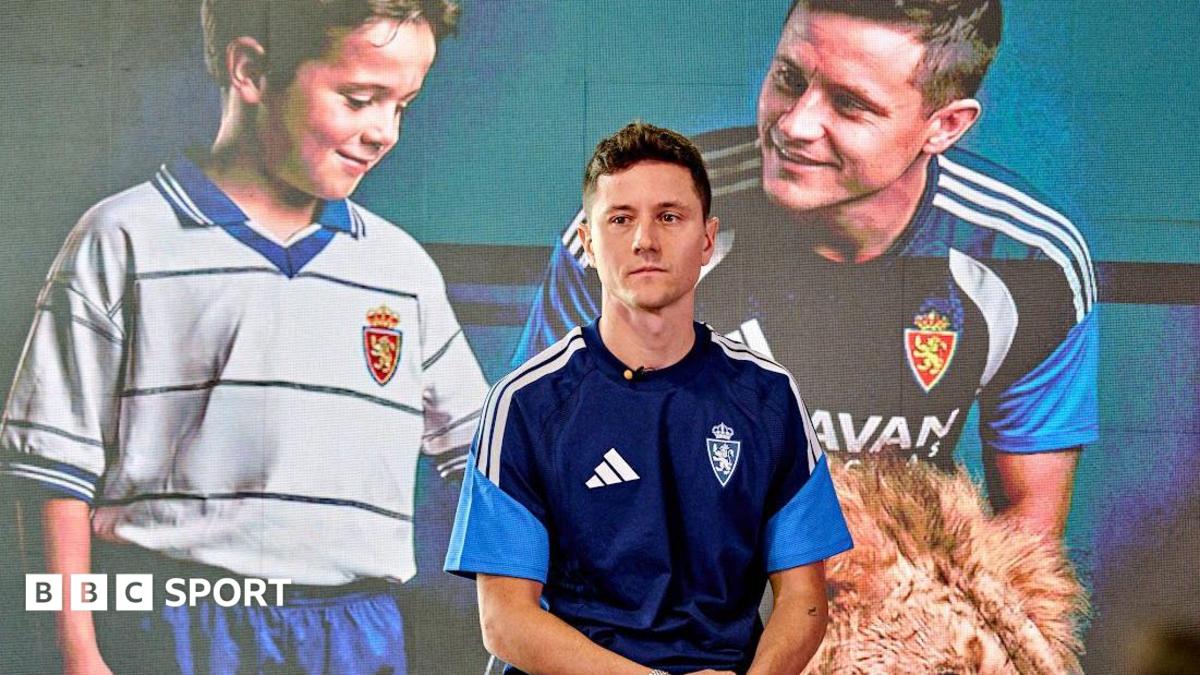
Ander Herrera has played at Old Trafford, the Parc des Princes and La Bombonera, but his next competitive match will be in Spain's third tier in front of around 6,500 fans against Gimnàstic de Tarragona. The 37-year-old midfielder has returned to Real Zaragoza, the club where he grew up and which he has supported all his life, and he has done so amid the toughest period in the club's recent history: in the third division and without collecting a salary.
His return comes 15 years after he left and follows a career in which he won the Europa League, the FA Cup and multiple league titles, worked under José Mourinho, Thomas Tuchel and Marcelo Bielsa, and shared dressing rooms with Lionel Messi, Neymar and Wayne Rooney. Despite all that, he describes coming back to Zaragoza as the last dream he wanted to fulfil.
- Ander Herrera returns to Real Zaragoza 15 years after leaving in 2011.
- He will play for free in the Spanish third tier and donate his salary to the club's foundation.
- His last competitive match was for Boca Juniors in the Copa Libertadores at La Bombonera.
- Zaragoza, 1995 Cup Winners' Cup champions against Arsenal, are now in the third division.
- Herrera has not ruled out coaching and wants to work with young players to stop them leaving too early.
Why Ander Herrera is playing without a contract at Real Zaragoza
Herrera's decision is not about financial need. The midfielder says he has looked after his money during a highly successful career and does not need to sign a contract. That is why he has chosen to donate his salary to Real Zaragoza's foundation while wearing the club's shirt again.
I don't need a contract. I have had a very successful career and I have taken care of my money. I can give this present to myself: to put that shirt on for free because I wanted to help my club, my team and my city.
The player says he is not thinking about money or contracts and feels privileged to be able to help in this way. His stated aim is to put his quality, his experience and his passion at the service of a team he believes belongs in Europe, fighting for trophies with the biggest clubs in Spain.
From Cup Winners' Cup glory to the third tier: Real Zaragoza's collapse
Real Zaragoza reached their European peak in 1995, when they beat Arsenal in the Cup Winners' Cup final at the Parc des Princes. Ironically, the PSG stadium later became Herrera's home for three seasons. That win over the London club is one of the midfielder's earliest football memories, which he watched from home while his father, Pedro Herrera, worked at the club.
Decades later, the reality is very different. Zaragoza were relegated from La Liga in 2012-13, exactly two years after Herrera left for Athletic Club. They then endured 13 seasons of declining finishes in the second division before falling into the third tier, a notoriously difficult level from which few historic clubs escape quickly.
It has been so sad for all us Zaragozistas. Real Zaragoza belong to Europe, they belong to competing for trophies, to fighting with the biggest clubs in Spain and in Europe.
Moving on from the past: Herrera's message to the Zaragoza dressing room
Since the first day of his return, Herrera has insisted he does not want to talk too much about the past. He believes the club has spent too long trapped in its mistakes and the reasons for its decline, a narrative that in his view is holding the club back mentally.
It's always killing our minds why that happened, always thinking about negative things. Let's stop crying about what happened in the past. Let's build on the future. Let's come every day to training with a smile.
His role in the dressing room goes beyond what happens on the pitch. Herrera wants to provide leadership and experience to a young squad facing the challenge of returning Zaragoza to professional football. But he is also looking ahead: he wants to work with young players, watch their development and help them avoid mistakes he made himself.
Social media pressure and the flight of academy talent
Herrera has a very clear message about the rush that social media creates for young footballers. He remembers being one of the best players in Zaragoza's academy and having chances to leave, but deciding to stay. He now sees the club struggling to keep its prospects and points to a telling statistic: most players who leave never reach professional football, while those who stay have a better chance of making it.
Because you run faster, it doesn't mean you are going to reach the objective faster. Social media is making us live too fast in every aspect of society.
That message, he insists, also applies to players' families. He wants to help them manage situations he has already lived through and which he may not have handled as well as he should have. He does not know whether he will become a professional coach, but he is not closing any doors because football is his passion and has been his whole life.
The Basque coaching school that inspires Herrera
If Herrera eventually moves into management, he will have a close reference point in the generation of Basque coaches dominating the Premier League. Xabi Alonso at Chelsea, Mikel Arteta at Arsenal, Unai Emery at Aston Villa and Andoni Iraola at Liverpool, with whom he shared a dressing room at Athletic Club, are examples of a school that fascinates him.
I don't know how to explain it. I think it goes in the DNA. The capacity to work, the capacity to respect the sport, to take every step and to try to be better every day.
For Herrera, the respect for football that you feel in the Basque Country is the key to that success. He says you will never hear a Basque person say that something in Madrid is better than in their own region, and that this love for their own things carries over into sport. That sense of belonging, he says, is something very special to experience.
What Herrera expects from his final chapter at Zaragoza
For now, his future coaching ambitions are on hold. His immediate priority is Real Zaragoza's present in the Spanish third tier and the goal of taking the club back to higher divisions. Herrera is aware his on-pitch peak may be behind him, but he remains focused on short-term objectives and on contributing to the team's rebuild.
I am so proud and I feel so privileged to have taken every step I have taken in my career. Hopefully I can end up successful at home.
Frequently asked questions about Ander Herrera's return to Real Zaragoza
Frequently asked questions
Why is Ander Herrera playing for free at Real Zaragoza?
Herrera has chosen not to take a salary because he does not need the money after a highly successful career and wants to help the club of his life during its worst sporting period. His wages are donated to the Real Zaragoza foundation, something the player describes as a privilege and a gift to himself.
What division do Real Zaragoza currently play in?
Real Zaragoza currently compete in Primera RFEF, the third tier of Spanish football. The club were relegated from La Liga in 2012-13 and, after 13 seasons in the second division, dropped to this level, which is considered one of the toughest in Spanish football.
When did Ander Herrera last play for Real Zaragoza?
Herrera left Real Zaragoza in 2011, when the club was in financial trouble, to sign for Athletic Club. He has now returned 15 years later, after spells at Manchester United, PSG and Boca Juniors, ready to finish his career at home.
Who is Ander Herrera's father and what is his connection to Zaragoza?
Ander Herrera's father is Pedro Herrera, a former player and former general manager of Real Zaragoza. Thanks to his time at the club, Ander experienced the 1995 Cup Winners' Cup triumph against Arsenal as a child, one of his earliest great memories as a Zaragoza fan.
What are Ander Herrera's plans after retirement?
Herrera has not ruled out becoming a professional coach, although he does not know what role will suit him best. He is particularly interested in working with young players, supporting their development and helping them avoid mistakes he made, as well as guiding their families.