
Ballon d'Or 2026 Power Rankings: Harry Kane leads as Vitinha and Michael Olise close in
The race for the 2026 Ballon d'Or enters its final stretch with Harry Kane leading the way after a 73-goal season for club and country. The Bayern Munich striker tops a campaign without a runaway candidate, with Vitinha, Michael Olise and Lamine Yamal all within striking distance. The winner will be announced on October 26.
 ByMatt
 9 min read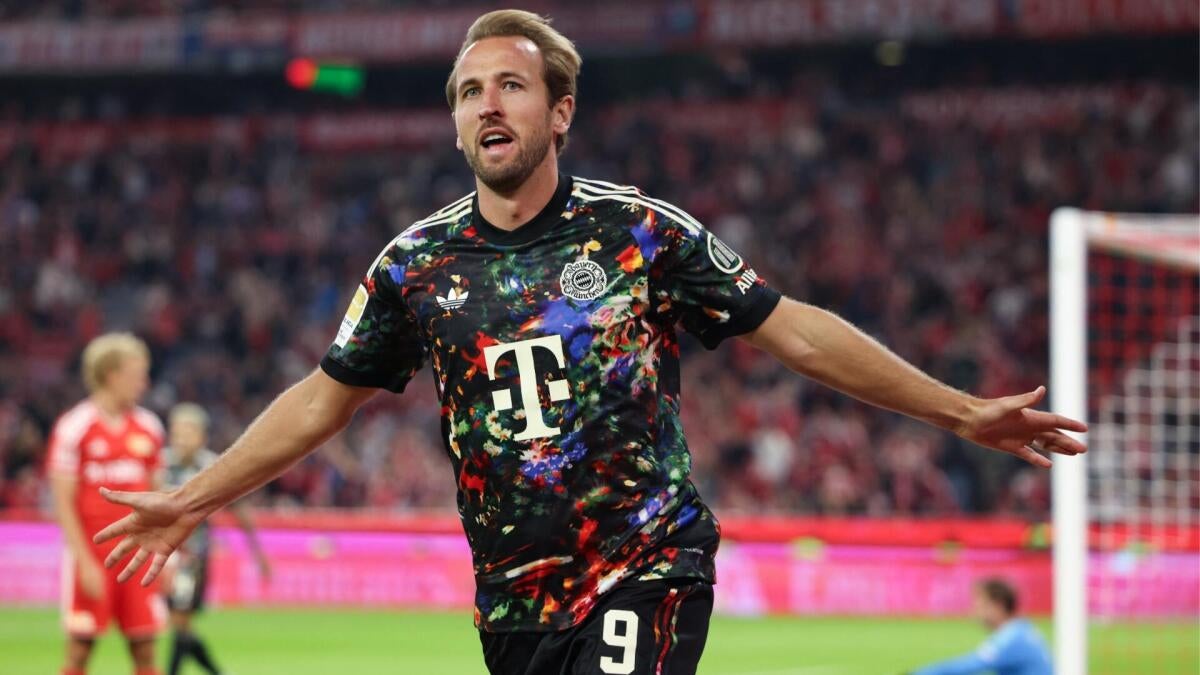
The 2025-26 season has reached its conclusion, and with it comes the final edition of the Ballon d'Or power rankings ahead of the October 26 ceremony. Harry Kane, Bayern Munich's talismanic striker, has emerged as the leading candidate after a staggering 73-goal haul across all competitions for club and country. Yet the absence of a truly dominant candidate has left the race wide open, with Vitinha and Michael Olise forcing their way into the conversation as serious contenders.
- Harry Kane scores 73 goals across all competitions and tops the final Ballon d'Or ranking.
- Vitinha cements his status as the engine of European champions PSG with nearly 4000 minutes played.
- Michael Olise finishes the season as world football's assist king, ten clear of anyone else.
- Lamine Yamal loses ground through injury: 96 days sidelined and only glimpses at the World Cup.
- Gabriel Magalhaes, Bruno Fernandes and Rodri round out a top ten packed with nuance.
Harry Kane rewrites the history books at Bayern Munich
The difficulty in crowning Kane as the best player on the planet over the past season stems largely from how his biggest campaigns ended. If the 33-year-old truly were that good, would he not have found a way to bend the Champions League and World Cup semifinals to his will? The clash against Argentina in particular produced the image of a striker lacking the spark to influence proceedings from the penalty area or in his usual deep-lying midfield roles.
That, however, was one match among more than sixty. The 73 goals across all competitions are a return that belongs to the prime years of Lionel Messi. And while the very biggest stage did not fall his way, Kane was unforgettable against Ivory Coast, thrilling across both legs against PSG and clinical in dismantling Real Madrid.
His Bundesliga numbers only strengthen the case. The 36 goals in 31 league games leave only Gerd Müller and Robert Lewandowski ahead of him in the history of the German top flight. The former won the Ballon d'Or. The latter probably would have claimed it had the award been handed out in 2020. There is no compelling reason why Kane should not take it home this time.
Vitinha, the quiet engine behind PSG's European triumph
PSG once again ruled Europe and France, but determining which of their players deserves the Ballon d'Or is a tricky exercise. Ligue 1 does not demand much from the Parisian squad, and it seems unfair to reward someone who spent half the season watching from the bench because his coach could afford to save him for the bigger Champions League tests. The minutes question is critical: if you are not on the pitch for half of your team's league matches, it is extremely difficult to argue you have been one of the ten best footballers in the world.
That rules out Ousmane Dembele, Joao Neves, Nuno Mendes and Khvicha Kvaratskhelia. They looked like some of the finest players on the planet in the spring, but spent much of the autumn on the sidelines. Vitinha is a different story. The Portuguese midfielder logged nearly 4000 minutes, far more than any of his fellow starters in the Champions League final. He was the engine without which PSG simply could not move forward. Across Europe's top five leagues, he ranked third for progressive carries per 90 minutes and second for progressive passes. Unlike most tempo-setters in midfield, he also chipped in with crucial goals and assists, firmly establishing himself as the best midfielder on the planet.
Michael Olise, the assist king of European football
Adding up domestic leagues, cups, European competitions and the World Cup, Michael Olise ended the year with ten more assists than any other player. The Bayern Munich winger proved over the summer that he could lead an attack comprised of some of the world's finest forwards, though his club form had already made that abundantly clear.
When assessing the season, it is wise not to lean too heavily on expected goals and assists. What truly matters is actual output, and if a player outperformed the models by a wide margin, all the better for him. In that respect, Olise separated himself from the field and earned his place among the most significant figures of the campaign.
Lamine Yamal and Kylian Mbappé: two candidacies shaped by nuance
In pure output terms, Lamine Yamal fell slightly short of the summit of Europe's attackers. He recorded 37 goals and assists, a remarkable return for a 19-year-old, but some way off the 40-plus totals posted by Kane, Olise and Mbappé. A starring role at the World Cup might have propelled him to the top spot, but a biceps femoris injury meant he could only show flashes of his best self over the summer.
That was the story of his entire season: 96 days lost to injuries, including a nagging groin problem in the autumn. These are common issues for young footballers still building the body of an elite athlete. Based on everything he showed when fit, Yamal will win the Ballon d'Or once he reaches full physical maturity.
Mbappé, Gabriel, Luis Díaz and Bruno Fernandes: individual merit versus collective achievement
Kylian Mbappé's candidacy is perhaps the hardest to read. Only Kane surpasses him in goal contributions, and when the World Cup lights shone brightest, the Frenchman was phenomenal. For an individual award, individual output matters enormously. If the Ballon d'Or were purely about team success, Real Madrid would have had to campaign for Dani Carvajal in 2024 simply because he won the Euros and the Champions League. That would have been absurd.
But collective success is one of the three criteria and must be weighed at least partially when you play for Real Madrid and France. Mbappé's campaign is not comparable to Russell Westbrook's 2017 season: his goals and assists must lead to something. Over the summer, they very nearly did.
Gabriel Magalhaes, meanwhile, probably will not crack the top ten, but his season deserves high recognition. He anchored the Arsenal defense that won the Premier League and came within touching distance of the Champions League. He blocked 13.2% of the shots Arsenal faced when he was on the pitch, a figure with echoes of Victor Wembanyama in basketball. Only three defenders have ever won the Ballon d'Or, and Franz Beckenbauer is the only one to have done so without winning a major international tournament that same year. Gabriel will not break that trend, but his collective campaign was outstanding.
Luis Díaz found himself in an unusual position as Bayern's third attacker. He has publicly backed Kane for the award. Still, his 39 combined goals and assists, exceptional passing and ability to move Bayern into dangerous areas make him one of the ten best footballers of the season. Nobody ranked sixth through eighth is actually going to win the Ballon d'Or, so his presence here is a reflection of his impact.
Bruno Fernandes represents the opposite case. He dragged a far inferior Manchester United side on his back and propelled them from midtable to the Champions League. Nine of his record-breaking 21 Premier League assists came from set pieces. He also created 99 chances from open play, 22 more than any other player in Europe's top five leagues. United's current struggles without his best version confirm just how much the team depended on him.
Messi and Rodri: the World Cup balance and the limits of an incomplete season
For Lionel Messi and Rodri, the question is how much weight the World Cup deserves. Being the best player on the runners-up at the age of 39 is an extraordinary achievement that only reinforces his status as the greatest of all time, and it should have earned him the tournament's best player award. But the Ballon d'Or covers the period from August 2025 to July 2026, and for too much of that stretch Messi was playing far below his talent level.
Rodri was Rodri again at the World Cup: the man who moved Spain through the lines, who carried the ball as effectively as he passed it and who won it back relentlessly. Glimpses of that player emerged as he accelerated his recovery from an ACL injury during his final months at Manchester City. He was brilliant for a half against Chelsea in January and the best player on the pitch when City beat Arsenal in the EFL Cup final. Even Pep Guardiola acknowledged that the real Rodri would not fully emerge until later in the season. That places a hard ceiling on his position in this ranking.
Frequently asked questions
When will the 2026 Ballon d'Or winner be announced?
The 2026 Ballon d'Or winner will be announced on October 26. The eligibility period runs from August 2025 through July 2026, with the World Cup serving as one of the season's defining showcases.
Why is Harry Kane the favorite for the 2026 Ballon d'Or?
Harry Kane scored 73 goals for Bayern Munich and England, a tally that belongs to Lionel Messi's prime years. His 36 Bundesliga goals place him behind only Gerd Müller and Robert Lewandowski in the competition's all-time single-season rankings.
How much does the World Cup influence the Ballon d'Or voting?
The World Cup is one of three criteria for the award, alongside individual performance and collective achievements. Spain won the title, but their triumph was built on collective strength rather than one standout performer, which has prevented Lamine Yamal or Rodri from locking down the top spot.