
Bournemouth's European debut vs Real Sociedad: The rise from League Two
Bournemouth play their first-ever European match on Thursday night against Real Sociedad in the Europa League. The English club reached the competition after finishing sixth in the Premier League under Andoni Iraola. Their journey from the fourth tier and their recruitment model explain how they got here.
 ByJavi
 7 min read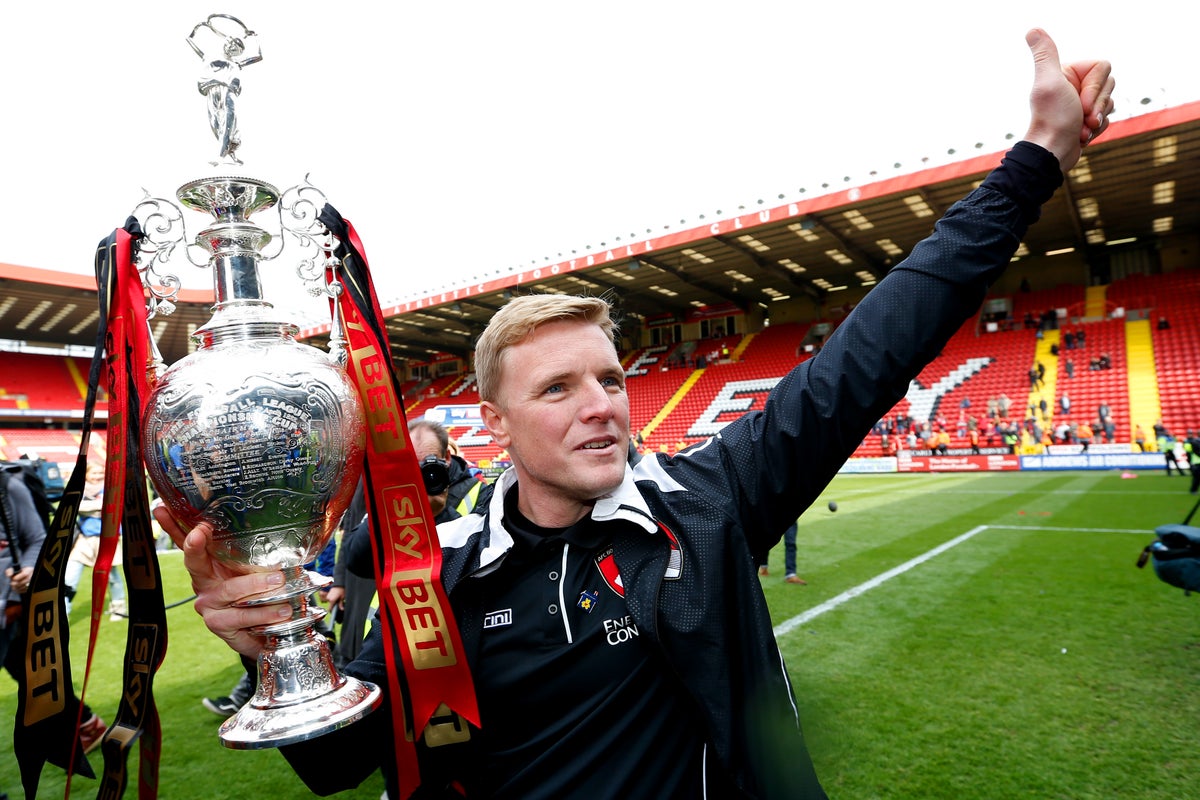
Bournemouth make history on Thursday night in San Sebastián. The English side visit Real Sociedad in the opening round of the Europa League, the club's first continental match after 126 years competing exclusively against teams from England and Wales. After finishing sixth in last season's Premier League under Andoni Iraola, the south coast club begin a European campaign that will take them from Norway to Israel, via San Siro.
- First European game in 126 years for Bournemouth, who travel to Real Sociedad in the Europa League.
- The club was in the fourth tier and on the brink of liquidation in 2010, before Jeff Mostyn's rescue.
- Eddie Howe and then Andoni Iraola built an intense, vertical playing identity that Guardiola has praised.
- Bournemouth have sold more than £300m worth of players in 18 months, reinvesting in young talent and infrastructure.
- Bookmakers place them as fourth favourites for the trophy, behind only Leverkusen, Juventus and Milan.
From the fourth tier and near liquidation to the Europa League
Bournemouth's transformation is impossible to understand without remembering where they came from. Their red and black stripes were inspired by the great Milan team of the 1960s, when the idea of the two clubs ever meeting seemed far-fetched. Back then, Bournemouth & Boscombe Athletic played in the fourth tier of English football, a level they returned to in 2010 after narrowly avoiding liquidation.
Former owner Jeff Mostyn poured emergency funding from his own pocket to keep the club afloat. Then Eddie Howe worked miracles, securing Football League survival despite starting the season on a 17-point deduction and leading the club up the divisions to the top flight. Since then, Bournemouth have spent nine of the past 11 seasons in the Premier League and achieved their record-high finish of sixth under Andoni Iraola.
A club model that inspires the Premier League
Bournemouth are regularly cited alongside Brentford and Brighton as model clubs that understand how to punch above their weight. Their entire stadium is smaller than Tottenham's South Stand, and Spurs earn almost as much from a single matchday as Bournemouth do from 19 home games. Yet one club is a well-oiled machine and the other just spent £90m on Sandro Tonali.
Each of the three clubs has found its own path. Brighton rely on Tony Bloom's data company to uncover hidden talent. Brentford exploit marginal gains like set-pieces to get ahead. Bournemouth have aligned their project with a very specific type of recruitment: signing athletic footballers who fit the intense style that Howe established and Iraola has evolved.
Discipline as a competitive advantage
Market mastery is the common denominator, but Bournemouth's secret may be simpler than that. Omar Chaudhuri, chief intelligence officer at Twenty First Group, a consultancy that advises clubs on transfer strategy, puts it this way: "Whenever we advise clubs, they're looking for that silver-bullet strategy or market you can recruit from. The slightly more boring fact is you just need a plan and you need the discipline to execute against it. It almost doesn't really matter what the plan is. The failing of most football clubs is that they don't have a really clearly defined plan."
That is where Bournemouth set themselves apart. They not only have consistency of vision and approach, but also consistency of the people executing the plan. Howe was manager for 10 years. Richard Hughes spent six years as a player and another 10 as sporting director leading recruitment. Together they built the club's distinct identity. A winger they signed, Matt Ritchie, is now technical director, having succeeded his former teammate Simon Francis in the role. Captain Adam Smith and vice-captain Lewis Cook have been at the club for more than a decade.
It's very rare that you have clubs that are almost tunnel-vision in the way in which they operate. The amount of clubs that flip-flop from one season to the next in the way in which they set up their structure and management, their coach, playing style, recruitment — it's all over the place. But having a plan and being consistent against it — it sounds so basic, but it's lacking in so many clubs.
How Bournemouth keep their best players
Bournemouth's success has also been their Achilles heel, in that the biggest clubs in Europe admire their work and want a piece of it. "We couldn't match up to the intensity," Guardiola said last season about Iraola's team. "Today, modern football is the way that Bournemouth play. You have to rise to the rhythm." It was no surprise when Liverpool came calling for Iraola, having already poached sporting director Hughes and left-back Kerkez.
Handling constant interest from Premier League giants comes with the territory. Bournemouth don't sign players with the explicit intention of selling them for a quick profit, but when they recruit, there is an understanding on both sides of the deal: the club offers a Premier League platform for players to prove themselves. Even so, there are red lines. The club made it very clear to Premier League rivals, particularly Chelsea, that Alex Scott would not be sold this summer, even for the £100m fee being touted. They were equally steadfast on Junior Kroupi and Rayan, two of the most talented young players in world football. There is an acceptance at Bournemouth that these players may eventually move on, but the club will only do so on their own terms, at fees that soften the blow and help rebuild.
The Europa League and the Vitality Stadium's future
The priority now is to cement Premier League status and avoid a backward step amid the turbulence of squad churn and European football. A new state-of-the-art training ground opened last year, and some of the income from recent sales is being invested in an £85m redevelopment of the Vitality Stadium, increasing capacity to more than 20,000 seats. Bournemouth ranked 14th for revenue in 2024-25 and money is tight against the league's new squad cost ratio rules, so a boost in matchday earnings will help.
So too will a deep run in the Europa League. The recent European triumphs of West Ham, Crystal Palace and Aston Villa have raised expectations, and with the massive shift of power towards the Premier League over the past decade, Bournemouth start their first-ever European campaign as fourth favourites for the trophy behind only Leverkusen, Juventus and Milan. That in itself is a mark of how far the club have come since they first adopted those stripes half a century ago.
Frequently asked questions
When do Bournemouth play their first European match and against whom?
Bournemouth play their first-ever European match on Thursday night against Real Sociedad in San Sebastián. It is the opening round of the Europa League's league phase.
How did Bournemouth qualify for Europe?
Bournemouth finished sixth in the 2023-24 Premier League under Andoni Iraola. It was their highest-ever league finish and earned them direct qualification for the Europa League.
Which players have Bournemouth sold recently?
In an 18-month period, Bournemouth sold Antoine Semenyo, Dominic Solanke, Illia Zabarnyi, Dango Ouattara, Milos Kerkez and Dean Huijsen for more than £300m combined. That policy of buying in affordable markets and selling high is a key part of their model.