
Celta Vigo's academy revolution: how youth development became a belief that fuels their European rise
Celta Vigo visit Real Madrid at the Bernabéu in the middle of their second consecutive European season. The Galician club's growth is built on a deep commitment to players developed at their Afouteza training ground. The club also pushed for the word 'canteirán' to be added to the official Galician language dictionary.
 ByMatt
 6 min read
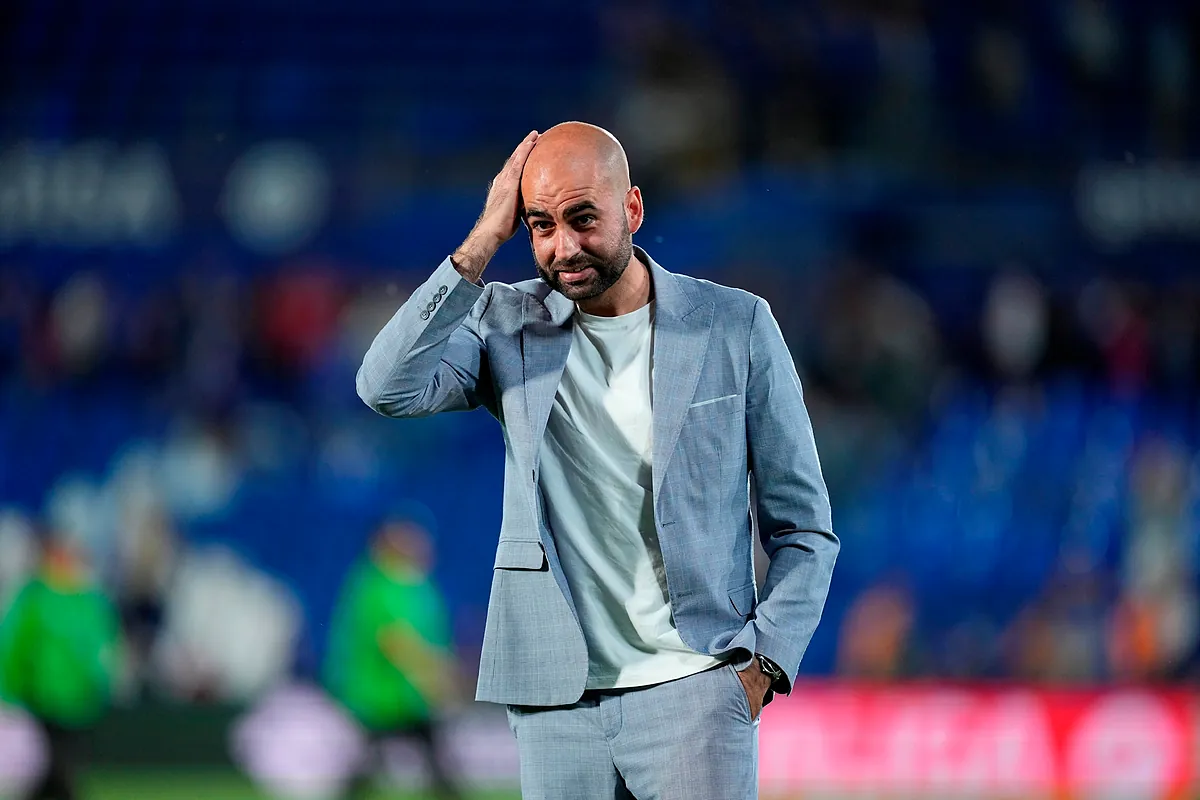
Celta Vigo travel to the Santiago Bernabéu on Saturday in the middle of their second straight European campaign, a sign of stability the club had not known for decades. The Galician side's revival rests on an unwavering commitment to its academy, a philosophy that has evolved from economic necessity into the club's defining identity. Álex Otero, assistant to the sporting director, is blunt about the internal stance: anyone who does not share that conviction has no place at the club.
- The Royal Galician Academy added the word 'canteirán/-a' to its official dictionary at Celta Vigo's request.
- Celta were the third club in Europe's top five leagues for academy player minutes last season.
- Head coach Claudio Giráldez, the youngest in LaLiga, continues to rely on homegrown players like Yoel Lago and Sergio Carreira.
- The reserve team, Fortuna, now competes in the Segunda División after promotion, a status shared only with Real Sociedad.
- Academy sales such as Gabri Veiga and Fer López have brought in nearly 60 million euros in total.
Royal Galician Academy recognition for Celta's youth development
The addition of 'canteirán/-a' to the official Galician language dictionary carries significant symbolic weight. Celta Vigo formally requested its inclusion from the Royal Galician Academy, which accepted a term that defines homegrown footballers. It is far from a minor detail for a club that has become a benchmark for youth development in northwest Spain.
The numbers support that status. Last season, the team from Vigo accumulated 27,456 minutes played by academy graduates, the third-highest figure among clubs in Europe's top five leagues. Only Athletic Club, with 44,687 minutes tied to their unique philosophy, and Barcelona, with 29,121, finished ahead of Celta in that ranking.
Claudio Giráldez and the generation powering Celta's European push
Giráldez took over the first team in March 2024 following the departure of Rafa Benítez. His appointment reinforced a clear thread of continuity from the academy: he is the youngest head coach in LaLiga and a product of Celta's own development system. Under his guidance, the commitment to young players has not wavered.
Yoel Lago and Sergio Carreira, aged 22 and 26, are the two outfield players with the most involvement this season. Both are expected to start at the Bernabéu, where Celta won last season. Alongside them, names like Javi Rueda, Javi Rodríguez, Hugo Álvarez, Miguel Román, Pablo Durán, Hugo González, Hugo Burcio and Andrés Antañón represent different waves emerging from the Afouteza training ground.
Afouteza and Fortuna: the reserve team's leap into professional football
Fortuna's promotion to the Segunda División is a milestone in the club's recent history. Having the reserve team in professional football is a privilege shared only with Real Sociedad and one that significantly boosts the club's appeal. For Otero, competing in the second tier is a huge push, a reward for years of cumulative work and a powerful argument for attracting young talent.
Playing in the Segunda División is a huge boost, a reward for all the work of these years and an attraction for players who want to come.
That structure allows the first team to draw on homegrown players naturally and makes the step up between categories less traumatic. The commitment is not temporary: it responds to a long-term plan focused on sustainability.
From financial crisis to a balance between academy and signings
The origin of this policy was not romantic but rooted in survival. The severe financial crisis that hit the club after the EuroCelta era, followed by insolvency proceedings, forced Carlos Mouriño's board to make drastic decisions starting in 2008. That was when the academy emerged as an urgent necessity to cut costs and remain competitive.
Over time, that necessity became a deeply held belief. Otero stresses that every coach at the club is aligned with the idea, because if young players do not get minutes, the project does not work. But he also warns against extremes: the club needs to balance its own production with outside signings that raise the level and bring different profiles.
That balance has enabled painful but necessary operations. The sales of Gabri Veiga and Fer López, both academy graduates, brought in around 60 million euros in total. Losing homegrown talent hurts in Vigo, but the club understands it as an essential lever for continued growth. The key is to avoid stagnation: keep producing academy players, sign wisely and stay ambitious.
Aspas and Borja Iglesias: the standard-bearers of a club-wide idea
Above the latest generation stand two names with immense weight. Iago Aspas is the ultimate symbol of the club and the city, a figure so significant that Balaídos is preparing a statue in his honour. Borja Iglesias, a World Cup winner with Spain, was the team's top scorer last season and also embodies the values of the academy.
Reaching European competition in two consecutive seasons had not happened since the turn of the millennium, when the EuroCelta era delivered six straight continental campaigns. That period ended in deep financial crisis. The current one, by contrast, rests on a more solid structural foundation: the academy as the engine, backed by a sporting department that tolerates no internal doubts about the chosen path.
Frequently asked questions
What does the word 'canteirán' mean in Galician?
It is the Galician term for 'academy player', referring to a footballer developed in a club's youth system. Celta Vigo requested its inclusion in the official dictionary of the Royal Galician Academy, which accepted it this week.
Where did Celta Vigo rank in academy minutes last season?
Celta Vigo were the third club in Europe's top five leagues for minutes played by academy graduates, with 27,456. Only Athletic Club and Barcelona registered higher totals.
Why did Celta Vigo originally turn to their academy?
The focus on young players began out of necessity after a severe financial crisis led the club to enter insolvency proceedings in 2008. Over the years, that obligation evolved into a firm belief shared across all levels of the club.