
Gianni Infantino apologizes to FIFA Council over scrapped World Cup privatization plan
FIFA president Gianni Infantino apologized to members of the FIFA Council in Zurich on Thursday over the controversial plan to privatize the World Cup, which was abandoned days after it came to light. The meeting exposed deep divisions: while some African officials back him, the German and English federations remain deeply skeptical of his leadership.
 ByInfoBlaugrana
 7 min read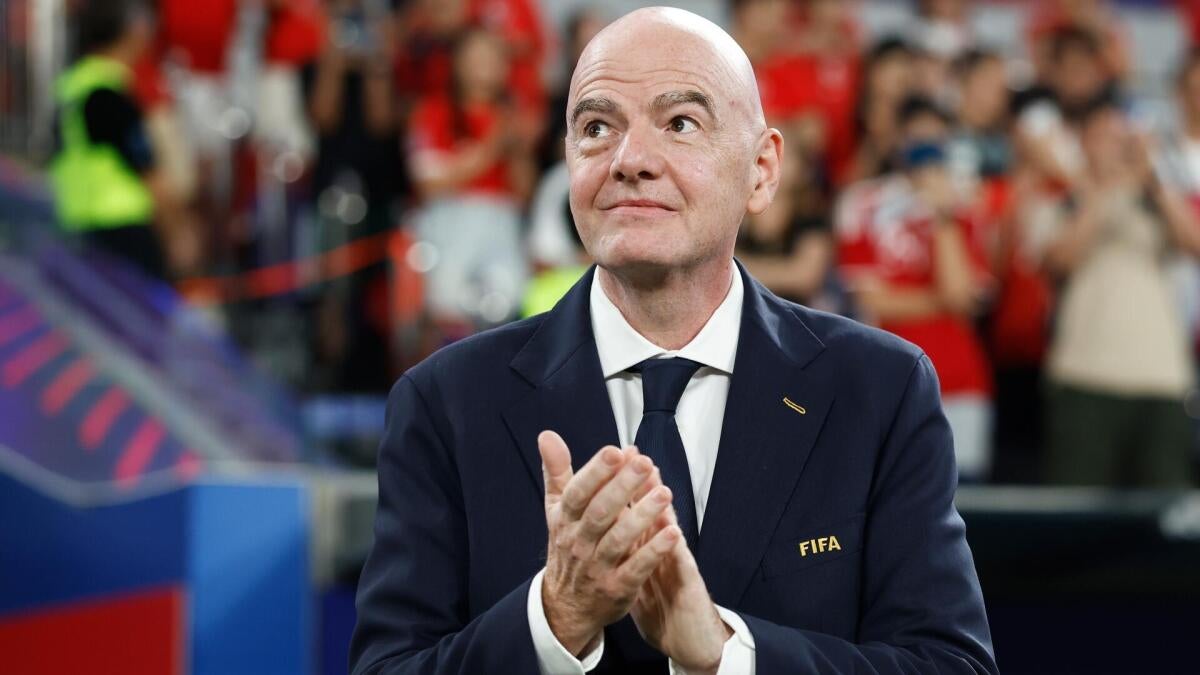
Gianni Infantino faced the FIFA Council in Zurich on Thursday and admitted mistakes over the botched attempt to privatize the World Cup. It was the first meeting of the organization's main decision-making body since the president announced a subsidiary to handle the tournament's commercial rights in July and scrapped it within days amid a wave of criticism. The episode continues to cast a shadow over his bid for re-election in March.
- Infantino apologized to the FIFA Council over the abandoned privatization project.
- FIFA Forward Enterprise was valued at around $20 billion.
- England and Germany say the president has not provided enough answers.
- FIFA will review disciplinary procedures after the Balogun suspension case.
- Infantino is chasing a fourth and final term, with Ramon Vega his only rival so far.
What FIFA Forward Enterprise was and why the plan collapsed
The plan centered on FIFA Forward Enterprise, a proposed subsidiary that would have controlled the commercial rights to the men's and women's World Cups and the Club World Cup. The operation was valued at around $20 billion and was set to sell minority stakes to private investors led by Thrive Eternal, the venture capital firm of Joshua Kushner, brother of U.S. president Donald Trump's son-in-law, Jared Kushner.
The initiative drew criticism from the moment it became public knowledge through a Times of London report in July, and it was dropped within days. The matter is far from over, though: a legal battle is now underway in the United States, and the project's shadow still hangs over Infantino's re-election campaign.
England and Germany refuse to back Infantino despite the apology
At Thursday's meeting, Infantino fielded questions from Council members about the subsidiary and asked them to submit further queries in writing for a later session. The reviews were mixed. Ahmed Yahya, president of Mauritania's federation, said he believes Infantino is the "right president" and that most member associations feel the same way. Others, however, held back from endorsing him.
German Football Association president Bernd Neuendorf said outright that he has no confidence in Infantino. England's chairwoman, Debbie Hewitt, was even tougher, arguing that the president was not forthcoming enough during Thursday's exchanges.
"One of the disappointing things is that we didn't get answers to anything that we had specifically requested, for example, getting the papers from FFE. I asked the question, 'Why not?' and we were asked to submit those questions in writing. I think the man has to answer those questions and if he doesn't answer those questions now, he's not fit to be FIFA president and that was what was shared in the meeting. I've repeatedly asked for the papers to be shared. I haven't received them and still in spite of the request today, I haven't received them."
FIFA offers $25 million per federation and a new working group
Infantino tried to ease concerns with a series of measures. He agreed to set up a working group to review governance procedures, and FIFA proposed increasing the funds it usually distributes among the 211 member associations. If the plan is approved, each could receive $25 million over the next four-year cycle.
The offer came in response to criticism from UEFA, Concacaf and the AFC, which argued that FIFA should tap its existing reserves to fund soccer projects around the world rather than create the subsidiary, which was sold with little success as a way to boost resources for member associations.
The Balogun red card case and the political pressure that will not go away
The scrutiny on the FIFA president does not stop with privatization. He continues to face criticism over the handling of Folarin Balogun's red card suspension during the World Cup. FIFA cited a rarely used rule to lift the one-match ban, making the forward available for the U.S. men's national team's round of 16 defeat to Belgium.
Infantino has been unable to shake the allegation that political pressure influenced the decision, especially after Trump said he called the FIFA president to ask him to review the organization's longstanding rules. FIFA's legal team will now review the disciplinary procedures following the Balogun case and present its findings at the Council's next meeting in December.
The Peace Prize awarded to Trump adds more tension to the Council
Infantino's detractors also point to the inaugural FIFA Peace Prize awarded to Donald Trump at last year's World Cup draw in Washington, D.C. as another example of the president's recent shortcomings. The award's future is unclear: FIFA's Social Responsibility Committee will assess it before the Council makes a decision in December.
Both the Peace Prize and Balogun's suspension were decided outside FIFA's usual governance procedures, which is why Council members keep demanding more information on how those calls were made.
"It is the rationale for why FFE happened in the way that it did, the Balogun case, the Peace Prize. The responses to those questions, which I still don't have answers to, will determine from my personal point of view whether or not Gianni is the right candidate. That will be the point at which or not we can say that any individual that was involved in FFE can or cannot be trusted because until we see what actually happened it's very difficult to say behavior needs or not to change. Those papers coming to Council are a crucial next part of us feeling comfortable as to what, if any, criminal proceedings need to take place."
Hewitt acknowledged there was "some contrition" in Infantino's apology but said the president did not offer enough information to change her position on his re-election. "From my position, nothing has shifted. I've no new information that makes me feel any differently, other than we do have a president who is apologetic," she said.
March election: a fourth term with Ramon Vega as the only challenger
Infantino is seeking his fourth and final term in March's election, which will take place during the FIFA Congress in Rabat, Morocco. Former Switzerland international Ramon Vega is his only opponent so far, though prospective candidates have until November 18 to submit their interest.
FAQ: the FIFA crisis and Infantino's re-election bid
Frequently asked questions
What was FIFA Forward Enterprise and why was it controversial?
It was a proposed FIFA subsidiary that would have controlled the commercial rights to the men's and women's World Cups and the Club World Cup. The plan involved selling minority stakes to private investors led by Thrive Eternal's Joshua Kushner, and it was withdrawn within days of becoming public due to widespread criticism.
How does the Balogun case affect Infantino's candidacy?
FIFA lifted Folarin Balogun's one-match ban using a rarely applied rule, sparking suspicions of political pressure after Trump admitted calling Infantino. FIFA's legal team will review the disciplinary process and present findings at the December Council meeting.
Who is running against Gianni Infantino in the FIFA election?
Former Switzerland international Ramon Vega is currently the only declared opponent. The election will be held in March during the FIFA Congress in Rabat, Morocco, with candidate submissions closing on November 18.