
Haaland's derby goal should not have stood as VAR made a clear error
Erling Haaland's winner in Manchester City's 1-0 victory over Manchester United should not have been awarded. VAR Matt Donohue failed to spot that Enzo Fernández was in an offside position and challenged for the ball before the goal, as the refereeing body has now confirmed. The same weekend also saw debate over Phil Foden's red card and Sunderland's penalty against Arsenal.
 ByJavi
 5 min read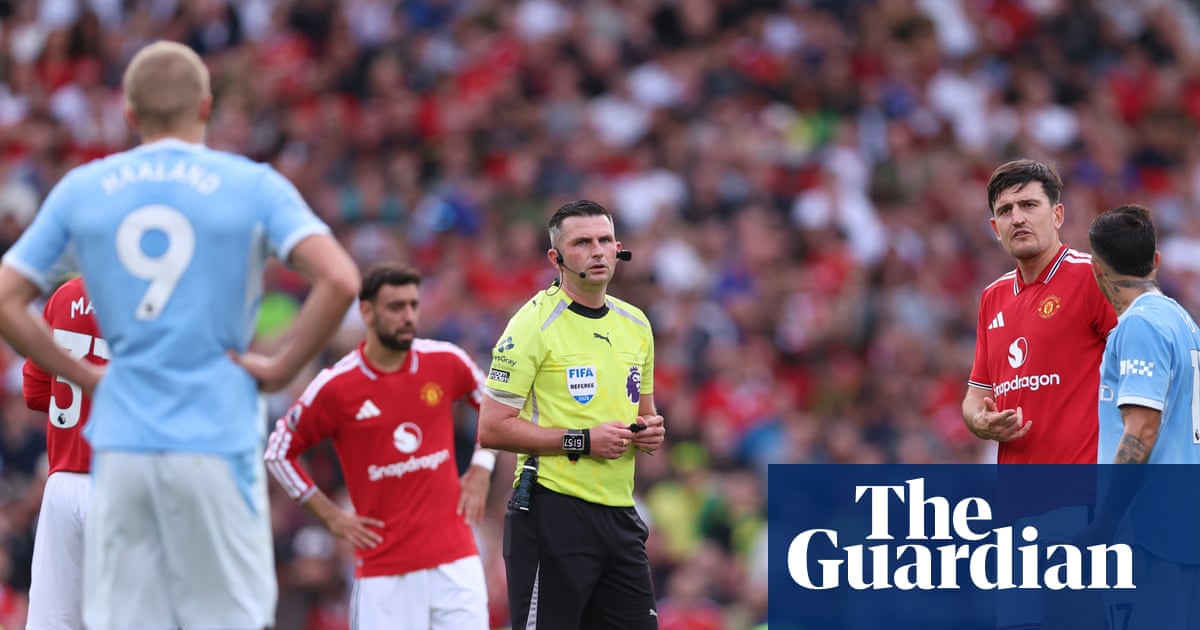
The goal that gave Manchester City a 1-0 derby win over Manchester United should never have stood. Video assistant referee Matt Donohue got it wrong when he allowed Erling Haaland's strike because Enzo Fernández was in an offside position and had challenged for the ball moments earlier. The refereeing body confirmed the mistake on Sunday night, handing the derby a controversial ending.
- The VAR allowed Haaland's goal despite Enzo Fernández being offside before the finish.
- Fernández challenged for the cross with a diving header and affected Lisandro Martínez.
- Phil Foden's red card for kicking Bruno Fernandes was the correct decision.
- Sunderland's penalty against Arsenal stood because there was no clear and obvious error.
- Refereeing standards across the Premier League have been strong so far this season.
Why the VAR review of Haaland's derby goal went wrong
When a video assistant referee reviews a decision such as this, they start from the moment the goal is scored and work backwards. Here, after Haaland finished, the assistant referee raised his flag for offside. The semi-automated system showed Haaland was in a legal position, so the on-field call was overturned and the goal awarded.
But the review stopped too early. Before Haaland scored, an offside Enzo Fernández, marked by Lisandro Martínez, launched himself into a diving header to attack the cross. The protocol required a two-part assessment: did Fernández make a clear attempt to play the ball, and did that action affect Martínez's ability to defend? The answer to both questions was yes, meaning the goal should have been ruled out.
Donohue's mistake and the wider refereeing picture in the Premier League
Matt Donohue is only human and made a mistake, but, in general, referees have started well this season.
The most likely explanation is that Donohue looked at the Fernández incident and did not see it as an offence. He is a highly skilled VAR, but referees are human and this error will hurt him. He will learn from it. Across the season, though, the standard has been strong: officials have handled holding offences well, the ball is in play longer and referees are managing goal-kicks and throw-ins effectively.
Phil Foden's red card and the flashpoint with Bruno Fernandes
The incident that led to Phil Foden's dismissal split opinion sharply: some argued for two red cards, others for two yellows, and a few for a talking-to. The sequence is clear. Foden planted his studs into Bruno Fernandes' midriff after the United captain had kicked at him with a toe. Michael Oliver produced a deserved straight red for violent conduct.
Fernandes provoked the City midfielder with a petulant touch, an act of unsporting behaviour that would have warranted a yellow card had Oliver spotted it. But the two actions are not comparable: Foden's kick carried excessive force and brutality, while Fernandes' did not. Even Enzo Maresca accepted in his press conference that the sending-off was the right call.
Sunderland's penalty against Arsenal and why VAR stayed out of it
The day before the derby, another decision caused plenty of noise: the penalty awarded to Sunderland in the Arsenal box. Dan Ballard and Ezri Konsa went to ground and referee John Brooks pointed to the spot. The footage clearly shows Konsa holding Ballard and focusing entirely on his opponent rather than the ball.
VAR Stuart Attwell reviewed the incident to determine whether Brooks had made a clear and obvious error. Ballard also had a slight grip on Konsa's shirt and there was some mutual tugging, none of which jumped out as a clear mistake. The on-field decision stood. The key point is the light touch VARs have applied this season: had no penalty been given, there would have been no intervention either, because it was not a clear and obvious error. It was a check complete either way.
Frequently asked questions about the Manchester derby refereeing decisions
Frequently asked questions
Why did the VAR not rule out Haaland's goal against Manchester United?
The VAR checked Haaland's position with the semi-automated system and confirmed he was onside. However, the review missed that Enzo Fernández was offside and challenged for the ball before the goal, which should have resulted in the strike being disallowed.
Was Phil Foden's red card the right decision in the Manchester derby?
Yes. Foden drove his studs into Bruno Fernandes' midriff with excessive force in an act of violent conduct. Michael Oliver was correct to send him off, while Fernandes' earlier poke would likely have earned a yellow card for provocation had it been seen.
Why did the VAR allow Sunderland's penalty against Arsenal to stand?
The referee awarded the penalty after clearly seeing Ezri Konsa holding Dan Ballard. The VAR reviewed the incident and found no clear and obvious error, even though there was also some shirt-pulling between the players, so the decision was confirmed.