
Harry Kane, first Bundesliga Ballon d'Or winner in 30 years: What it means for German soccer
Harry Kane became the first Bundesliga player in 30 years to win the Ballon d'Or when he collected the award last week. The Bayern Munich striker ended a drought that stretched back to Matthias Sammer's 1996 triumph with Borussia Dortmund. Philipp Lahm sees Kane as a beacon of hope for a league that still struggles to retain its biggest stars.
 ByJavi
 9 min read
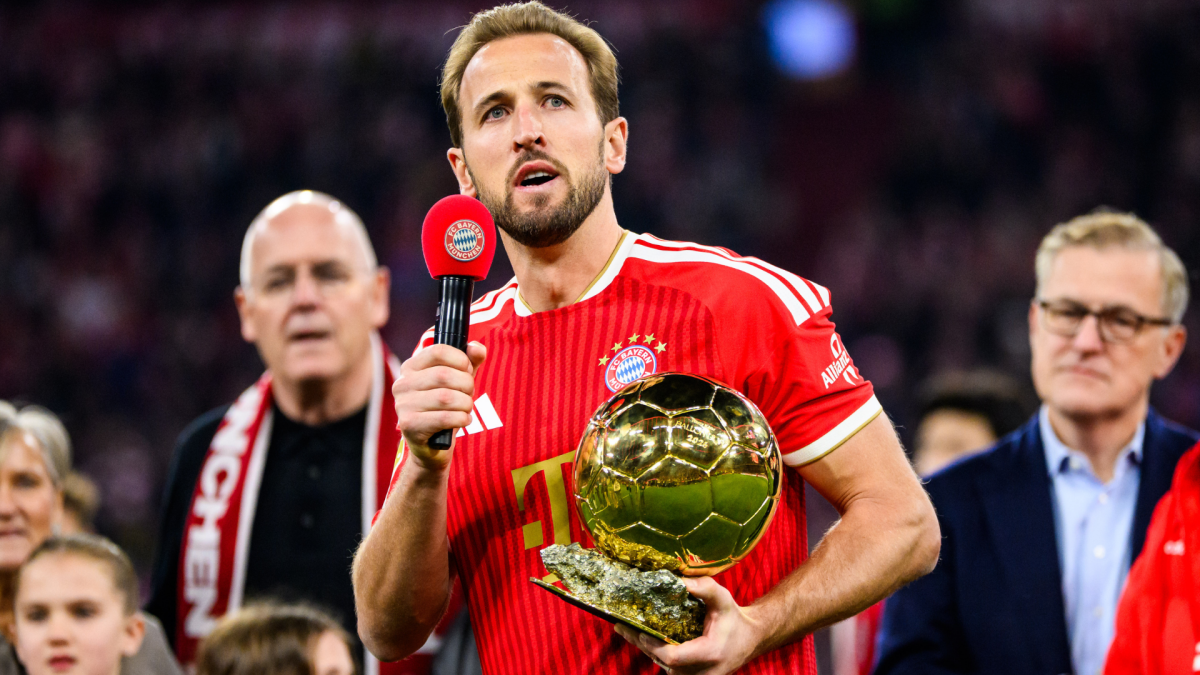
Harry Kane made history last week when he became the first Bundesliga player in 30 years to win the Ballon d'Or. The Bayern Munich striker ended a drought that dated back to 1996, when Matthias Sammer, then of Borussia Dortmund, took home the award. Soccer's most prestigious individual prize puts Germany back in the spotlight, but it also reopens an uncomfortable conversation about the league's ability to keep its stars and compete with the Premier League and LaLiga for international talent.
- Harry Kane is the first Bundesliga player to win the Ballon d'Or since Matthias Sammer in 1996.
- Philipp Lahm believes a German player in the Bundesliga has a harder path to the award than one succeeding abroad.
- Bayern accounts for a large share of the league's global brand value and its executives want a stronger international push.
- Dortmund accepts it cannot sign established superstars and leans on closeness and identity as its calling card.
- The 2-2 draw in the Klassiker keeps the top two level on points and keeps title race hopes alive.
Why Harry Kane's Ballon d'Or matters for the whole Bundesliga
Philipp Lahm does not hide his skepticism when assessing what Kane's award can do for German soccer. The former World Cup-winning captain and Bayern Munich defender believes Kane and Michael Olise benefited from arriving from another country, and he argues that a German player competing in the Bundesliga faces a much tougher road to the Ballon d'Or.
It helped Harry Kane and Michael Olise that they came from another country. I think it's quite difficult for a German player playing in the Bundesliga to win the Ballon d'Or.
The numbers back that up. Sammer, in 1996, was the last German player and the last Bundesliga-based player to lift the trophy. Since then, only three German players have finished inside the top three, the most recent being Manuel Neuer in 2014. Kane, meanwhile, is just the seventh Bundesliga player to rank in the top three since Sammer's victory.
Bayern's dominance and the challenge of keeping talent in Germany
Lahm links that pattern to another defining trend in the Bundesliga: Bayern Munich's undisputed control of the title race. The club with which he won eight league championships has lost the title only once since the 2012-13 season, a dominance that undercuts competition at the top of the table. Lahm, however, prefers to see the glass half full when it comes to Kane.
I do hope that the good players stay in the Bundesliga. I'm hopeful through Harry Kane that a lot of other players will follow because it's possible to win and play here.
Bayern sporting director Christoph Freund sums up the pitch to join the club plainly: you can win titles in Germany and in Europe. Bayern have lifted the Champions League twice in the last 14 years, a mark matched only by Paris Saint-Germain and topped by Real Madrid. The Bundesliga's wealth distribution works in their favor and likely played a significant role in landing both Kane and Olise.
The balance of financial power in European soccer has shifted, though. The Premier League has become the destination of choice because its financial strength backs up that ambition. Robert Lewandowski and Mario Götze proved themselves at other German clubs, especially Dortmund, before climbing the ladder to Bayern. Florian Wirtz's move from Bayer Leverkusen to Liverpool in 2025 points to a different order, one some hope Kane's Ballon d'Or can help change.
The Bundesliga brand and Bayern's international ambitions
Bayern's executives believe their club makes up roughly 50% of the Bundesliga's global brand value. They defend their on-field strength but also argue they carry too much of the load alone. Rouven Kasper, a member of the executive board, points to the oversized presence of Premier League clubs on preseason tours as a model and questions whether the league is committed to the same strategy.
The league needs to be stronger and bring more reach, but the league exists from the clubs. We are the spearhead of German football, and together with the other clubs and the league, we need to be even more active in the markets.
Bayern could use Kane as a hook for player recruitment, even if other leagues retain their appeal. Freund concedes that the Premier League is the biggest league at the moment and that Spain is very attractive because of Real Madrid and Barcelona, but he insists Bayern and the Bundesliga offer outstanding stadiums, a unique atmosphere and the chance to perform at the highest level, as Kane has shown.
Dortmund's alternative: closeness and feeling over economic logic
Borussia Dortmund accept that some battles cannot be won. CEO Carsten Cramer admits that, from a purely economic standpoint, the club sits far behind Munich, Madrid, London, Paris and Milan. If a player is only interested in trophies and money, or dreams of winning the Ballon d'Or in black and yellow, Dortmund probably cannot offer that.
Cramer makes the case for a different kind of appeal. Dortmund have not won the Bundesliga in the last 13 years, yet interest in the club keeps growing: their social media following and the reception on every trip confirm it. Dortmund offer closeness, an identity that makes them many fans' second club, in what Cramer describes as the club's own path, without complaints or a desire to shrink its ambitions.
The Klassiker draw and the hope of a real title race
Saturday's 2-2 draw between Bayern and Dortmund leaves the two level on points after eight matches. The underlying numbers tell a different story: Bayern generated 4.48 expected goals and hit the crossbar twice, once on Kane's second-half penalty and again on a late Lennart Karl strike, while Dortmund managed just 0.74 xG. Still, Patrick Owomoyela, a defender in Jürgen Klopp's back-to-back title-winning Dortmund side, sees cracks in Bayern.
It's just about believing it's possible. Bayern have shown this season that you can wound them. You can see it in almost every game, even in that cup match against Magdeburg that they won 6-1. They hit the post, hit the crossbar, scored and had two other big chances. Now take a team with more quality and the right belief, and something might be possible.
Owomoyela knows the recipe for toppling Bayern because he lived it. The key, he says, goes beyond the squad or tactics: the current Dortmund side under Niko Kovac has improved its defensive structure and added creativity since the coach arrived in January 2025. The problem is that knowing the recipe does not guarantee the same result.
Even though you know the recipe, the soup is not always the same. Even though you put in the same ingredients, it's not always tasting the same, and if it does, maybe it's not the perfect soup. You need to find that special something.
For Klopp's Dortmund, that special something was camaraderie, a family feeling that is hard to replicate. Owomoyela admits it gets harder every year because soccer has changed and players now arrive with short-term plans: they want to be part of a project for a while and then move on. That constant turnover makes building locker-room chemistry difficult.
It is the same issue he identifies in Bayer Leverkusen, the last Bundesliga champion not named Bayern. That ambitious 2023-24 side was dismantled within two years: Wirtz and Jeremie Frimpong went to Liverpool, Granit Xhaka landed at Sunderland, Piero Hincapié joined Arsenal and Xabi Alonso stopped at Real Madrid before taking over at Chelsea. Jonathan Tah chose the old-school route and signed for Bayern. The next challenger to Bayern's throne will likely meet the same fate, its stars scattered between Munich and England.
Saturday's draw, in any case, offers a flicker of optimism. If Dortmund keep pace with Bayern, the Bundesliga becomes more intriguing and the possibility of a genuine title race stays alive. Owomoyela, however, keeps his feet on the ground.
We weren't really eye-level competitors. We were there and we were able to hunt, but from a little distance, and I think everybody understands that.
Frequently asked questions
Who was the last Bundesliga player to win the Ballon d'Or before Harry Kane?
Matthias Sammer, then playing for Borussia Dortmund, won the Ballon d'Or in 1996. No Bundesliga-based player had claimed the award since then until Harry Kane's victory last week.
Why does Philipp Lahm think it is harder for a German to win the Ballon d'Or in the Bundesliga?
Lahm argues that attention is greater when a player succeeds in leagues like the Premier League. He uses Florian Wirtz as an example: his profile would be much bigger at Liverpool than if he only played in Germany.
How many Bundesliga titles has Bayern Munich lost since the 2012-13 season?
Bayern Munich have lost the Bundesliga title only once since the 2012-13 campaign. That prolonged dominance is one reason competitiveness at the top of the league has been reduced.
What separates Borussia Dortmund from Bayern Munich in attracting talent?
Dortmund accept they cannot compete financially with clubs from Munich, Madrid, London or Paris. Their pitch is built on closeness, identity and a sense of belonging, a model that, according to their CEO, continues to draw strong interest from fans.