
Iranian football returns to Asian elite amid war and unresolved league title row
The Persian Gulf League kicked off in mid-August after nearly six months of suspension caused by the war, and this week Esteghlal and Tractor SC returned to continental action in the AFC Champions League Elite. The prolonged stoppage and the vast financial gap with Saudi Arabia are weakening the sport in Iran.
 ByNatilla7 min read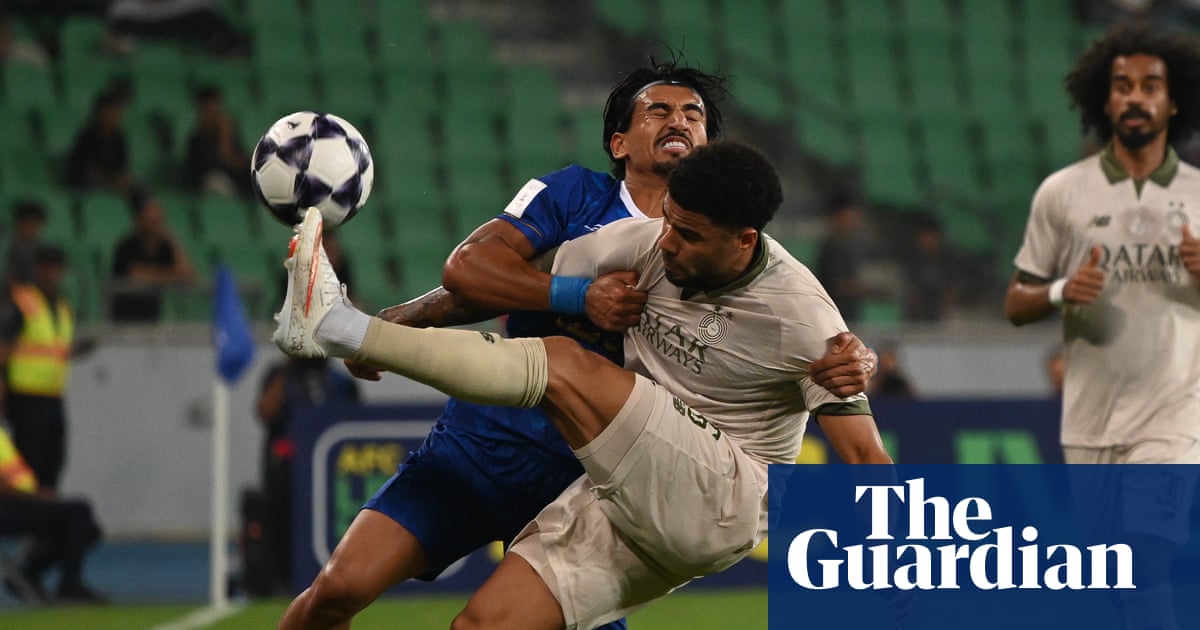
Iranian club football returned to the international stage this week as Esteghlal and Tractor SC began their campaigns in the AFC Champions League Elite. The comeback comes only weeks after the Persian Gulf League resumed in mid-August, following a stoppage of almost six months caused by the war. The country's football, which commanded global attention during the recent World Cup in the United States, now faces a present shaped by economic uncertainty, a growing competitive gap with Saudi Arabia and an unresolved dispute over who should be crowned champion of the previous season.
- The Persian Gulf League was halted in late February and the previous season was eventually abandoned.
- Esteghlal were top after 22 rounds and argue they should be declared champions, a demand that divides the clubs.
- The international return produced contrasting results: Esteghlal beat Al-Sadd 3-0 while Tractor SC lost 1-0 to Shabab Al-Ahli.
- Iranian clubs cannot compete with the $200m plus spent by Saudi Arabia's Al-Hilal on three signings this summer.
- Iran has only two representatives in the continental tournament, compared with five each for Saudi Arabia and Japan.
Esteghlal lay claim to the league title they led when the war broke out
The Tehran club were top of the table when the competition stopped at the end of February, with 22 of the 30 rounds played and a two-point lead over Tractor SC. For Esteghlal head coach Sohrab Bakhtiarizadeh, that lead is enough reason for the ten-time Iranian champions to add an eleventh title without playing the remaining fixtures.
Esteghlal should be declared the champions of the previous season. Being at the top of the table is a suitable criterion for determining the most successful team in a tournament at any given time. This is also what Esteghlal fans want.
A decision is expected soon, but the proposal does not convince the majority of the other clubs. Among the most reluctant are teams backed by large industrial companies, such as the steel-linked Sepahan and Foolad, which have suffered particularly badly from the economic effects of the conflict. While the dispute remains open, Esteghlal have made a solid start to the new campaign.
The Persian Gulf League returns and Tehran's derby moves to Isfahan
The league restart has dispelled fears that matches would be played behind closed doors. Most games have taken place with fans in the stands and some attendances have been encouraging. The derby between Persepolis and Esteghlal, the biggest fixture in Iranian football and arguably in all of Asia, drew 50,000 spectators in Isfahan, the country's second city.
The usual home of both teams, Tehran's famous Azadi Stadium, remains unavailable. It is not because of direct damage from bombs or missiles, although the wider sports complex has been hit, but because of ongoing repair work. The money spent on those renovations has become a hot topic, another reminder that little in Iranian football is ever simple even during times of relative peace.
Mixed start in the AFC Champions League Elite
Esteghlal opened their continental campaign with a convincing 3-0 victory over Qatari powerhouse Al-Sadd. The achievement was all the more impressive because the home match was played in Basra, in southern Iraq. Iranian clubs are used to playing their home games away from their own stadium, a situation Bakhtiarizadeh considers one of the biggest burdens on the national game.
Being deprived of home advantage has been one of the biggest problems that Iranian football has faced in recent years. In every situation, this opportunity has been taken away from Iranian clubs. Nevertheless, it makes us happy to host Al-Sadd in Basra, close to Iran, with the presence of some of our supporters who live in southern Iran.
Around 8,000 fans turned up at the vast Basra International Stadium and tried to recreate the atmosphere of Tehran. Far more modest was the support for Tractor SC in Dubai, where only 1,300 people watched their 1-0 defeat against Shabab Al-Ahli. Given that relations between Iran and the United Arab Emirates are far from cordial these days, the small crowd may even have come as a relief to the Iranian side. The new European-style league phase format leaves plenty of time to recover from a poor start.
The financial gulf with Saudi Arabia weighs on Iranian football
Although the draw avoided an immediate meeting with Saudi clubs, financial inequality remains the great structural obstacle. Even before the teams from Riyadh and Jeddah began spending enormous sums in 2023, Iranian clubs were already at a disadvantage. Years of international sanctions have had a huge economic impact and football, closely connected to the state, has not escaped the consequences: stagnant salaries, often neglected facilities and greater difficulty arranging training camps or friendlies abroad.
The Saudi benchmark is now out of reach for the rest of the continent. Al-Hilal alone spent more than $200m this summer to sign Ollie Watkins, Gabriel Martinelli and Crysencio Summerville. Saudi Arabia, which also hosts the latter stages of the Asian Champions League under an arrangement recently extended to 2029, and Japan each have five representatives in the 32-team tournament. Iran, a historic powerhouse of Asian football, has only two.
Despite everything, Bakhtiarizadeh is confident that Esteghlal, continental champions in 1970 and 1991, can compete with dignity. The former Iran international defender accepts that matching Saudi spending power is impossible, but points to collective effort and the club's history as reasons to fight over 90 minutes.
I still believe that football is a game in which, over 90 minutes, you may be able to overcome this financial gap through effort, determination and teamwork. Competing against Asian teams is certainly difficult, especially since we have entered the competition without having participated in the summer transfer market but Esteghlal's history compels us to try.
Frequently asked questions about Iranian football's return
Frequently asked questions
Why was the Iranian league suspended?
The Persian Gulf League was halted in late February because of the war. The stoppage lasted almost six months and the previous season was eventually abandoned without being completed, which has sparked a debate over the title that was never awarded.
Which team was top of the Iranian league when it was suspended?
Esteghlal of Tehran were leading after 22 of the 30 scheduled rounds, two points clear of Tractor SC. That is why the club argues it should be declared champion of that abandoned season.
How many Iranian teams are playing in the AFC Champions League Elite?
Iran has two representatives in the 32-team tournament: Esteghlal and Tractor SC. Saudi Arabia and Japan, by contrast, each have five clubs, highlighting the financial imbalance in Asian football.