
LaLiga changes ball boys' role to speed up matches
LaLiga has introduced fixed ball stands and restricted what ball boys can do, banning them from handing balls directly to players. The rule aims to stop deliberate time-wasting during matches.
 Byvarela4 min read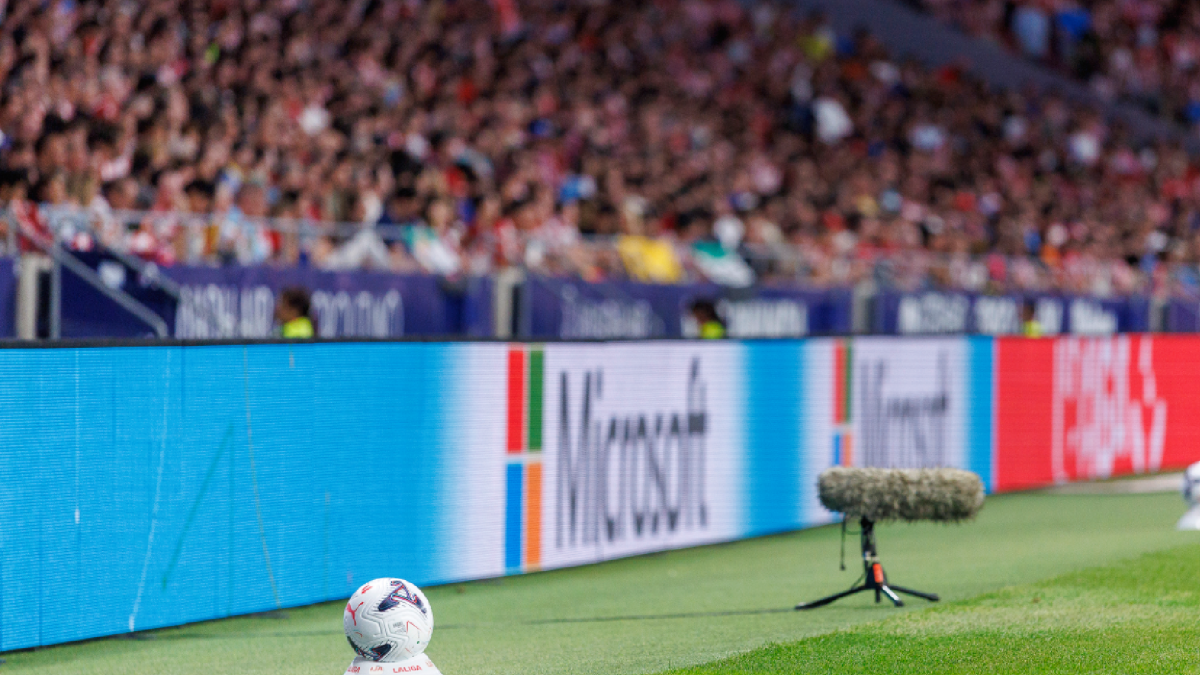
LaLiga has rolled out a rule change that permanently reshapes the ball boy's job on matchdays: balls must now sit on fixed stands placed around the pitch, and can no longer be handed straight to a player or thrown onto the field. The move targets a long-standing tactic used to control a match's tempo depending on the home side's scoreline.
- Balls will rest on fixed stands positioned around the pitch instead of in ball boys' hands.
- Handing or throwing the ball directly to a player is now forbidden.
- Ball boys only step in to retrieve the ball when it goes out, then must retreat behind the advertising boards.
- Balls will also be closely managed during half-time and at the final whistle.
- The goal is to cut dead time and make the pace of play more consistent across every stadium.
Why LaLiga is scrapping the traditional ball boy role
For years, ball boys quietly played a decisive part in managing playing time. When the home team led, it was common for the ball to come back slowly; when trailing, the opposite happened, with quick returns to speed up restarts. That discretion, while part of football folklore, sparked constant controversy and was seen as an outside influence on match outcomes. The new rule removes that decision-making power entirely.
How the new ball stands will work in practice
The system is straightforward: stands or trays are placed at several points around the pitch perimeter, guaranteeing a ball is always available without relying on how fast or slow one person reacts. Ball boys still retrieve balls that go out of play, but their role now ends at placing the ball on the nearest stand and stepping back behind the pitch-side advertising. They cannot approach a player or take part in restarting play in any way.
The end of a tradition tied to Spanish football's own stories
For generations, being a ball boy served as an entry point into professional football for youngsters linked to major academies. Names like Brahim Diaz, who used to celebrate goals from Isco and Santi Cazorla pitchside at La Rosaleda, or Pep Guardiola, who collected balls as a child at Camp Nou before becoming the midfield brain of Cruyff's Barcelona and later one of the game's most influential coaches, are part of that romantic grassroots narrative.
The Simeone family and other recent examples at Atletico Madrid
Atletico Madrid holds some of the most touching stories tied to this role. Giuliano Simeone, now a regular starter for the first team and an Argentina international, was a ball boy as a kid at the old Vicente Calderon, where he celebrated goals hugging his father, then-manager Diego Simeone. Years later, another academy product, Iker Luque, held the same job, feeding balls to players like Koke, Griezmann, Oblak and Fernando Torres, before breaking into the first team and scoring a decisive goal at Mestalla.
What this rule change means for the flow of the game
Beyond any nostalgia it might spark, the decision fits a broader trend in modern football: minimising dead time and keeping playing conditions consistent across every ground. With balls always ready on fixed stands, the game removes a variable that used to hinge on judgement, age, or even instructions given to a child standing at the touchline. It's one more piece of a wider package of changes aimed at keeping the ball in play as much as possible.
Frequently asked questions
What exactly changes for ball boys in LaLiga?
They can no longer hand or throw the ball directly to players. Their job is now limited to placing it on fixed stands around the pitch and stepping back behind the advertising boards.
Why was this measure introduced?
To stop ball boys from influencing the pace of a match to suit the home team, whether speeding up or slowing down restarts, and to reduce overall time-wasting.
Have any famous footballers started out as ball boys?
Yes, cases like Pep Guardiola at Camp Nou, Brahim Diaz at La Rosaleda, and Giuliano Simeone and Iker Luque at Atletico Madrid show many academy players began in that role.