
Manchester United's 1974 relegation: a warning from history that still echoes at Old Trafford
Half a century after their most famous relegation, Manchester United are again looking nervously at the bottom of the table. The departure of a legendary manager, instability in the dugout and boardroom uncertainty create a scenario with clear echoes of the 1973-74 season. That team also believed it was too big to go down.
 ByMatt
 8 min read
Manchester United find themselves in a position they had not experienced for four decades: sitting in the relegation zone at this stage of the season. The comparison with the side that lost its top-flight status in 1974 is inevitable, and although football has changed enormously, the pattern of decline carries more than a passing resemblance to the present.
- The United of 1974 went down six years after winning the European Cup, following a run of four managers and a mishandled departure by their legendary figurehead.
- Tommy Docherty took charge with the team bottom of the table and was given freedom to rebuild the squad from scratch.
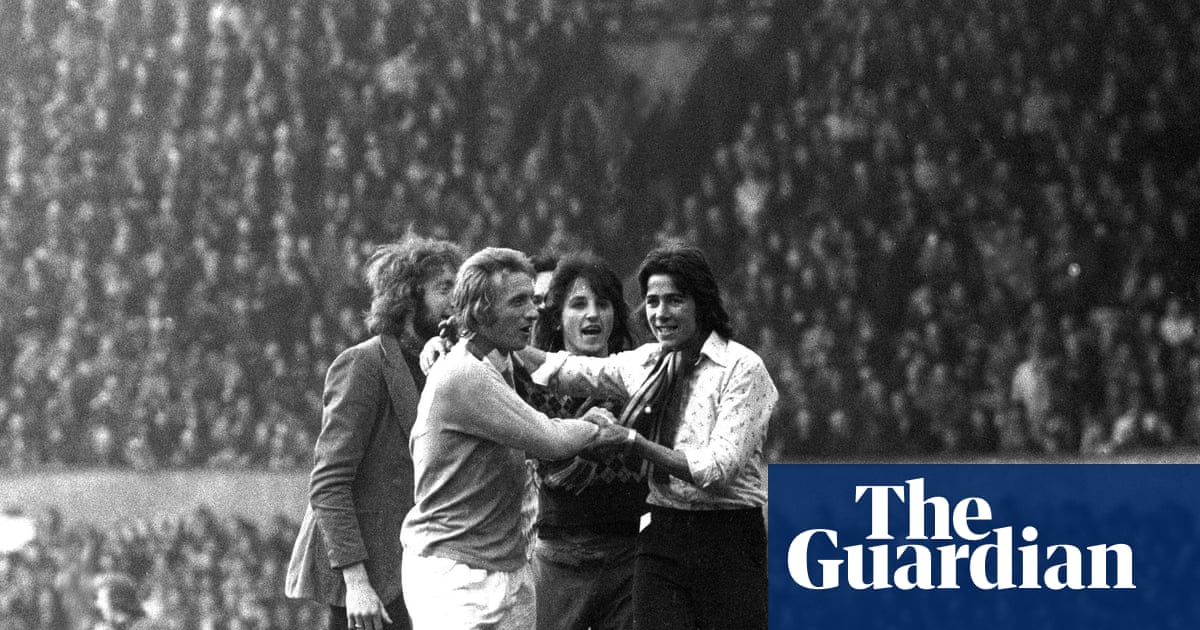
- Relegation was confirmed with a defeat against Manchester City and a backheel goal from former United player Denis Law.
- In the Second Division, Old Trafford averaged more than 47,000 spectators, the highest attendance in the country.
- The club returned to the top flight at the first attempt and finished third the following season.
Why Manchester United's 1974 relegation remains such a stark comparison
There are notable similarities between the United relegated in 1974 and the one now glancing nervously at the bottom of the table. In both eras, a legendary manager stepped away from the dugout but remained close to the club, watching from the Old Trafford directors' box and casting a long shadow over every successor.
Sir Matt Busby stepped aside from the side that had won the European Cup in 1968, but stayed on as a director. Decades later, Sir Alex Ferguson did much the same: he retired from first-team duties and watched from the stands as a succession of replacements tried and failed to restore the club to the summit.
In the six years after the European triumph, United turned to Wilf McGuinness, brought Busby back temporarily to preserve their top-flight place, then appointed Frank O'Farrell before settling on Tommy Docherty, who suffered the ignominy of taking them down. In the past eight years, the list of sackings has included José Mourinho, Ole Gunnar Solskjær, Erik ten Hag, Ruben Amorim and Michael Carrick.
How Tommy Docherty's Manchester United sleepwalked into relegation
Most outside observers believed Manchester United were simply too big to go down. Inside the club, however, the direction of travel was easier to detect. After a heavy defeat at Crystal Palace in December 1972, Busby offered Docherty the job in the Selhurst Park boardroom.
There's a lot of trouble in the camp.
Docherty was in charge of the Scotland national team at the time and took a few days to consider the offer, but eventually accepted. Busby warned him the task would not be easy. He said it would be like turning an oil tanker around, only bigger, and that he might have to take a step back in order to make a leap forward. Docherty later wrote in his autobiography that he never believed Busby was alluding to relegation.
Docherty's rebuild: new signings, painful exits and an ageing squad
From the start, Docherty was given a free rein to reshape the squad. The day after his appointment he signed George Graham from Arsenal for £120,000, a considerable fee at the time. Alex Forsyth followed from Partick for £100,000, and Docherty pulled off a coup when he persuaded Lou Macari to join bottom-of-the-table United rather than Liverpool for £200,000.
The giants of the previous era were gradually moved on. Bobby Charlton told him in February that, at 37, the season would be his last. Other big names wanted to stay, but Docherty felt a reset was essential. The side that had conquered Europe in 1968 had been allowed to grow old together, with no one renewing its foundations in time.
The manager accepted his decisions would be unpopular and set about ending the United careers of Denis Law, Tony Dunne, Pat Crerand and David Sadler, among others. George Best, who had already retired once and returned under Docherty, played his final game for the club on New Year's Day 1974 after repeated problems with timekeeping.
The most controversial departure was Law, who was allowed to join Manchester City. With the team rooted to the bottom, a lack of goals proved costly: at one stage the joint-top scorer was Alex Stepney, the goalkeeper, with two penalties.
Relegation confirmed and Manchester United's immediate response
The drop was sealed on the penultimate weekend with defeat against Manchester City. The blow was made all the more painful by the decisive goal coming from Law's backheel, shortly after his departure from United. It remains one of the era's defining images and was revisited in the documentary Too Good To Go Down.
On the Old Trafford pitch, Docherty was asked whether the club might drift into obscurity. His answer captured the size of the institution: there was no danger of that, because even if they washed the jerseys and hung them out to dry, 15,000 people would stand watching.
A few days later, Docherty expected to be sacked. Instead, Busby handed him a case of champagne, reminded him of the oil tanker analogy and told him to get to work bringing the club back up.
Why the 1974 relegation is not the same as United's current predicament
United's recovery was swift, and it underlined just how different the circumstances were. In the Second Division, Old Trafford averaged more than 47,000 fans per match, the best in the country, and the away support regularly outnumbered the home crowd in towns and cities across England. Docherty targeted young and hungry players: Steve Coppell from Tranmere, Stuart Pearson from Hull City and Jim Holton from Shrewsbury Town.
The direct, attacking football synonymous with United returned and the Scot built a fearless 4-2-4 formation. Promotion was secured at the first attempt and the following season the club briefly threatened to become only the fifth side to win the First Division after going up, although they eventually finished third and lost the FA Cup final 1-0 to Southampton.
That rapid revival was also possible because the gap between the top two divisions was far narrower. Relegation did not mean losing a colossal broadcast deal, the club was not saddled with debt by its owners and the wage bill was not tied to Champions League qualification.
Players were not on long contracts and were easier to buy and sell. Agents did not wield the disruptive influence they do today, and supporters were more patient. In the modern game, with its financial and sporting structures, any comparable mistake would carry a far heavier price.
Frequently asked questions
When did Manchester United last get relegated?
Manchester United were relegated in the 1973-74 season after losing to Manchester City in the penultimate round of fixtures. It was their most famous demotion, sealed by a backheel goal from former United striker Denis Law.
Who was Manchester United's manager when they were relegated in 1974?
Tommy Docherty was in charge. He had taken over during the 1972-73 campaign and kept the club up that season, but could not prevent relegation the following year. He remained in the job and led United back to the First Division at the first attempt.
Why is Manchester United's current situation compared to 1974?
Because the club is again experiencing a long period of managerial instability and poor results, with the bottom of the table lurking. The departure of Sir Alex Ferguson and the succession of coaches without a clear direction have revived memories of the transition that followed Sir Matt Busby's exit.
The lesson from the past that Manchester United cannot afford to ignore
The story of 1974 is not only about relegation, but also about a warning ignored for too long. That United side paid heavily for failing to refresh the squad in time and for a series of muddled decisions at board level. The current side is showing similar symptoms, but in a sporting and financial landscape that is far less forgiving.
If the lessons of that decade are not heeded soon, the consequences could prove far more painful than a single season in the second tier. The margin for error has narrowed drastically, and the patience that existed in the Seventies has all but vanished from modern football.