
Real Madrid Lead the All-Time Ballon d'Or Points Ranking, with Cristiano Ronaldo Ahead of Messi
A statistical analysis turns 69 Ballon d'Or editions into points to measure who has dominated the award. Real Madrid emerge as the leading club in history, Germany tops the nationalities ranking, and Cristiano Ronaldo edges Lionel Messi in accumulated points.
 ByNatilla6 min read
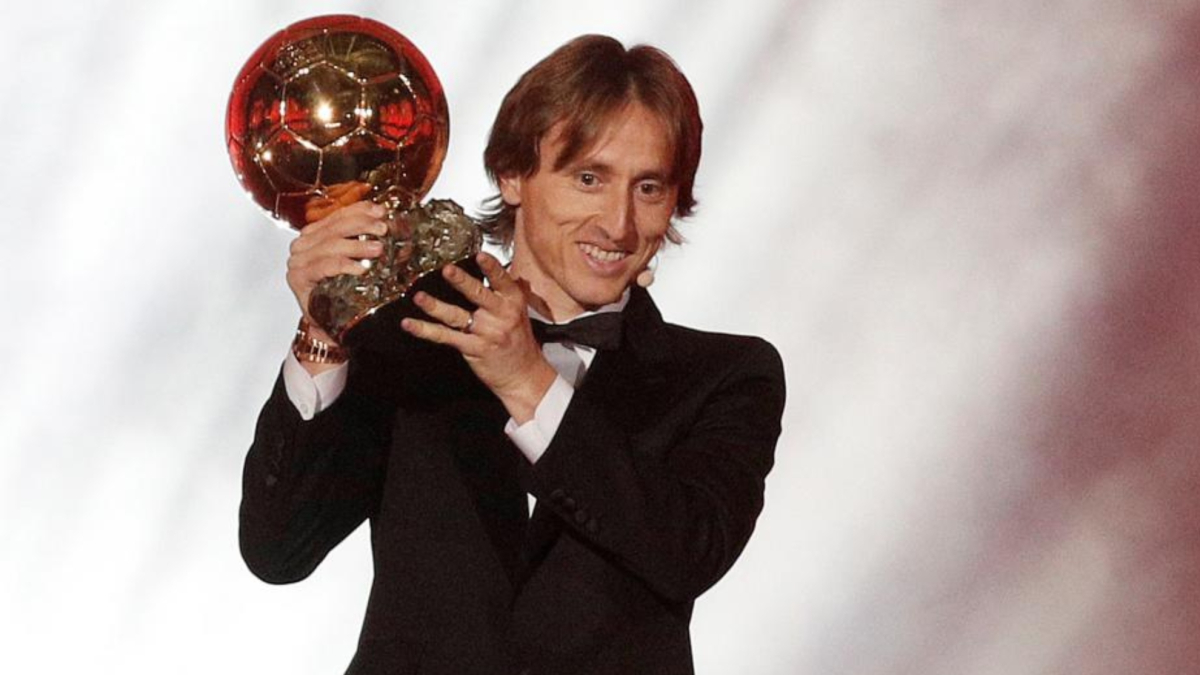
What would happen if the entire history of the Ballon d'Or were turned into a single points-based ranking? That is the question explored in a detailed statistical analysis of the 69 editions held between 1956 and 2025, with the exception of 2020, when the award was not handed out. The result paints a different hierarchy from a simple trophy count: Real Madrid lead as a club, Germany top the nationalities table, and Cristiano Ronaldo edges Lionel Messi in accumulated points.
- Real Madrid lead the all-time club ranking with 3,189 points, comfortably ahead of FC Barcelona (2,717).
- Cristiano Ronaldo has 460 accumulated points, just ten more than Lionel Messi's 450.
- Germany top the nationalities ranking with 3,854 points, followed by Italy and France.
- Barcelona posted the highest single-decade tally: 930 points between 2010 and 2019.
- Eusébio accounts for 53.8% of all Benfica's historical points.
Real Madrid, the Club with the Most Points Across 69 Ballon d'Or Editions
The white shirt stands above every other. Real Madrid top the historical ranking with 3,189 points, well clear of FC Barcelona's 2,717. Juventus complete the podium with 2,059, followed closely by Bayern Munich on 2,027, while AC Milan sit fifth with 1,829. Behind them come Manchester United (1,636 points), Inter Milan (1,362), Liverpool (1,098), Ajax (734) and Manchester City (719).
Madrid's dominance is not just the product of one exceptional generation. Their real secret is continuity. Real Madrid have scored points in 57 different editions, from the days of Alfredo Di Stéfano and Raymond Kopa to the era of Cristiano Ronaldo and the club's more recent stars. Few institutions have managed to stay in the conversation about the world's best footballers for so long.
Cristiano Ronaldo Leads on Points, but Messi Tops the Titles and Average Per Appearance
The rivalry that defined an era also finds a new way to be measured. Cristiano Ronaldo is the player with the most accumulated points in the award's history under this system: 460. Lionel Messi sits second with 450. Only ten points separate two players who pushed individual standards to levels that are hard to imagine.
However, the ranking changes when the relationship between appearances and results is examined. Messi won eight Ballon d'Or awards, three more than Cristiano, and reached the podium 14 times compared to the Portuguese's 12. He also holds a higher average of points per appearance: 28.125 against 25.556. One leads the ranking by volume; the other stands out for his efficiency and the number of times he ended up lifting the trophy.
Germany, the Most Consistent Nationality in Ballon d'Or History
If the badge is swapped for the flag, another dominant force emerges. Germany lead the all-time nationalities ranking with 3,854 points, ahead of Italy (3,229), France (2,976), England (2,821) and Spain (2,551). Five European powerhouses occupy the top positions of a ranking that also reflects the historical weight of their footballing traditions.
Germany's leadership is built on very different generations and a particularly balanced spread of protagonists. Their most productive player represents only 8.3% of the total score. In Italy, that percentage is even lower at 6.9%. The contrast with other nationalities is striking. Cristiano Ronaldo accounts for 29.9% of all of Portugal's points, while Lionel Messi represents 44.5% of Argentina's historical footprint.
The Shifting Balance of Power, Decade by Decade
No dominance has ever been permanent. Between 1956 and 1959, Real Madrid led with 260.5 points, driven by the founding years of their European legend. In the 1960s, Manchester United took over with 389 points. The 1970s belonged to Bayern Munich, who accumulated 541 thanks to a generation led by Franz Beckenbauer. Juventus took control in the 1980s (452 points), before AC Milan dominated the 1990s (494).
The turn of the century returned prominence to Real Madrid, who collected 649 points between 2000 and 2009. Then came Barcelona's decade: between 2010 and 2019, the Catalan club reached 930 points, the highest figure recorded by any club in any of the periods analysed. In the most recent stretch, from 2021 to 2025, Real Madrid are back at the top with 378 points.
Clubs Built on One Star and Nations with Deep Traditions
Not every institution builds its history in the same way. Benfica represent the most striking example in the study: Eusébio is responsible for 53.8% of all the points accumulated by the Portuguese club. Arsenal show a 31.6% dependence on Thierry Henry, while Kylian Mbappé represents 24.7% of PSG's score. At Manchester City, Kevin De Bruyne accounts for 21.1%.
At the opposite end are Juventus and Real Madrid, whose leading players represent only 8.1% and 8.2%, respectively. The difference highlights two models of greatness: institutions that have continually reinvented themselves and those whose finest chapters remain deeply tied to one exceptional star.
How Much Talent Is Concentrated in a Few Elite Clubs and Countries
The analysis also shows how heavily individual recognition has been concentrated in a small number of institutions. On average, the four highest-scoring clubs in each edition account for 50% of the points distributed that year. In the case of nationalities, the top four countries absorb 57.7%. The 2010, 2014 and 2015 editions stand out as among the most concentrated by club, while 1974, 1982 and 1990 are notable for the dominance of a handful of nationalities.
For decades, the Ballon d'Or has been explained through individual snapshots: a footballer lifting the trophy, a memorable season or a vote that sparked controversy. But when all the rankings are brought together and turned into points, a different story emerges, one of continuities, shifts in power and generations that left their mark. Winning a Ballon d'Or means touching the sky for one season. Leaving a mark that endures over seven decades is another way of reaching eternity.
Frequently asked questions
Who has the most points in Ballon d'Or history?
Cristiano Ronaldo leads the all-time ranking with 460 points, just ten ahead of Lionel Messi on 450. However, Messi has more titles (eight against five) and a better average of points per appearance.
Which club leads the all-time Ballon d'Or ranking?
Real Madrid top the table with 3,189 points, ahead of FC Barcelona (2,717), Juventus (2,059) and Bayern Munich (2,027). The Spanish club have scored points in 57 of the 69 editions held.
How are the points calculated in this Ballon d'Or ranking?
The P30 system awards 30 points to the winner of each edition, 29 to the runner-up, 28 to third place and so on. This measures not only who won the trophy, but who stayed close to the summit for the longest time.