
Sandro Mazzola, Inter legend and 1968 European champion, dies aged 83
Sandro Mazzola, one of Italy's greatest forwards and an eternal symbol of Inter Milan, has died at the age of 83. He won two European Cups, four Serie A titles and the 1968 European Championship with Italy. His career was shaped by the shadow of his father Valentino, the Grande Torino captain killed in the Superga air disaster.
 Byvarela7 min read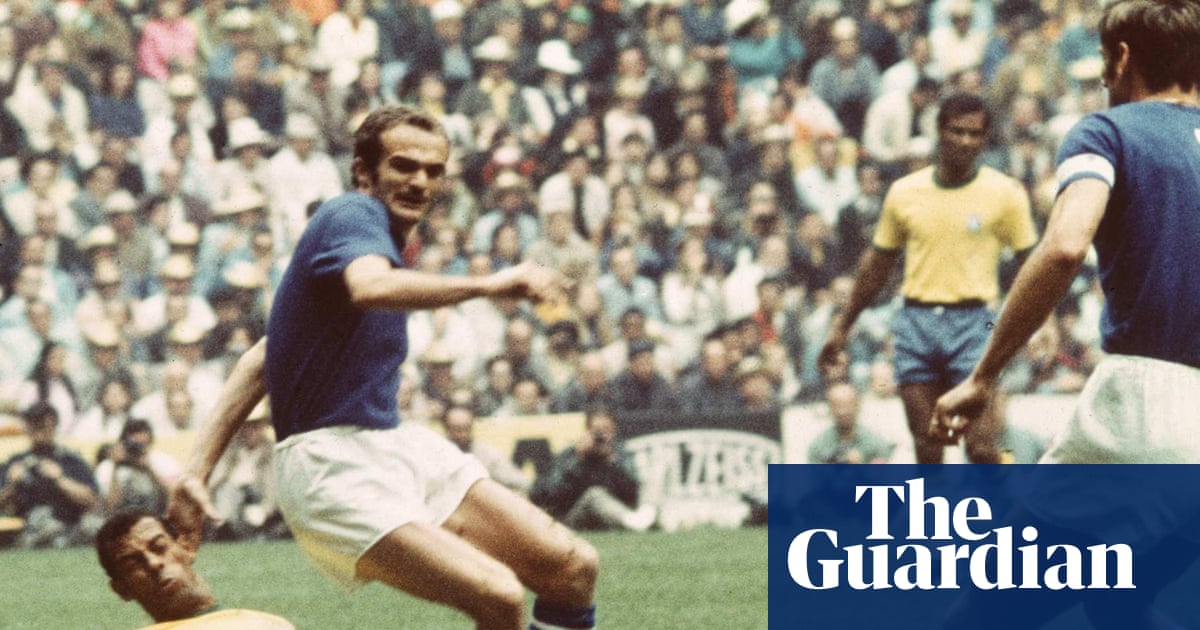
Sandro Mazzola, one of the finest forwards Italian football has produced and a timeless symbol of Inter Milan, has died aged 83. He spent 17 seasons defending the Nerazzurri shirt, winning two European Cups and four Serie A titles. With the Italian national team he became European champion in 1968 and played in the 1970 World Cup final, lost to Pelé's Brazil.
- He won two European Cups with Inter in 1964 and 1965, scoring twice in the 1964 final against Real Madrid.
- His father, Valentino Mazzola, captain of Grande Torino, died in the Superga air disaster in 1949, when Sandro was only six years old.
- He formed one of Italian football's most famous rivalries with Gianni Rivera, resolved through the 'staffetta' at the 1970 World Cup.
- He scored 158 goals in 565 official appearances for Inter and earned 70 caps for Italy.
- After retiring in 1977, he worked as an executive for Inter and Torino and as a broadcaster for RAI.
The shadow of Superga: the tragedy that shaped Sandro Mazzola's childhood
Sandro Mazzola's life was marked from the very beginning by one of the greatest tragedies in Italian sport. He was six years old when his father, Valentino Mazzola, captain of the legendary Grande Torino side and of the Italian national team, died at the age of 30 along with the rest of the squad. The chartered plane bringing them back from Lisbon after a friendly played in bad weather crashed into the Superga hill overlooking Turin in May 1949. There were no survivors. The accident shocked the entire nation.
His father's figure followed Sandro throughout his career. When Inter won their first European Cup in 1964 by beating Real Madrid 3-1, the young Mazzola scored two of the Italian side's goals. Alfredo Di Stéfano, the great Real Madrid star, gave him his shirt after the match along with words Mazzola would always remember: he told him he was worthy of his father.
From Inter's academy to becoming a Nerazzurri icon
Born in Turin, Sandro endured a difficult childhood. His parents' separation three years before the crash, and a traumatic episode after Valentino's death in which he was taken by his father's new partner and hidden in a barn before being returned to his mother, left a deep mark on his early years. The family moved to Milan, where a former teammate of Valentino opened the doors of Inter to them. Angelo Moratti, the club's owner at the time, made Sandro and his brother Ferruccio club mascots: they attended every home game in the blue and black stripes and were paid a small fee for it.
In time, both brothers joined Inter's academy. Sandro made his first-team debut in 1961 at the age of 18, in an extraordinary match: a 9-1 defeat to Juventus. Coach Helenio Herrera, angered by what he considered unjust refereeing decisions, fielded the youth team en bloc. Mazzola scored Inter's only goal from the penalty spot, hours after sitting school exams that morning.
That was the first of his 158 goals in 565 official appearances. He became a key figure in a side packed with talent: the Spanish playmaker Luis Suárez, Brazilian winger Jair, sweeper Armando Picchi and full-backs Giacinto Facchetti and Tarcisio Burgnich, who would also become his teammates with the national team.
Grande Inter: two European Cups and catenaccio as a calling card
Under Herrera's guidance and his use of the catenaccio defensive system as a launchpad for lethal counterattacks, Inter dominated European football during the 1960s. The victory over Real Madrid in 1964 was followed a year later by a win against Benfica. In 1967 they reached another final, but fell to Celtic. That team went down in history as Grande Inter, heir to the myth of Grande Torino.
Mazzola's success attracted interest from Juventus. Gianni Agnelli, the Turin club's president and head of Fiat, offered to double his salary and give him a Fiat dealership. Mazzola turned down the proposal and remained loyal to Inter for his entire career.
Mazzola and Rivera: the 'staffetta' that divided Italy
Sandro Mazzola's name will forever be linked with that of Gianni Rivera, his contemporary and rival at AC Milan. The two played a similar role on the pitch, and national coach Ferruccio Valcareggi considered it impossible to fit them both into the starting line-up. They had already played together when Italy were humiliatingly eliminated by North Korea at the 1966 World Cup. Two years later, Rivera missed the European Championship through injury, and Italy, inspired by Mazzola, beat Yugoslavia 2-0 to claim their first continental title.
They were contrasting figures: Rivera, a stylish creative force and a regular on glossy magazine covers; Mazzola, known as 'Il Baffo' for his ever-present moustache, a more versatile, pragmatic and consistent operator who lived quietly away from the spotlight.
The 1970 World Cup and the final lost to Pelé's Brazil
To solve the dilemma ahead of the 1970 World Cup, Valcareggi came up with the 'staffetta': Mazzola would start the match and Rivera would replace him at half-time. The experiment worked all the way to the final against Brazil, but collapsed at the worst possible moment. The coach delayed the substitution, and when Rivera finally came on, Italy were already 3-1 down. Six minutes remained, and there was no time for him to influence the game. Pelé's Brazil lifted the trophy.
Four years later, at the 1974 World Cup in Germany, Valcareggi started both men together. The team, now aging, failed to make it beyond the group stage and seemed to prove the coach's earlier reservations right. Mazzola ended his international career with 70 caps and 22 goals, compared to Rivera's 60 appearances and 14 goals.
Logic suggested that two such opposing figures could hardly be friends. Yet a month before his death, Mazzola made it clear in an interview with La Gazzetta dello Sport: what existed between them was a healthy rivalry and immense respect.
What Sandro Mazzola did after hanging up his boots
Mazzola retired in 1977 after seven seasons as Inter captain. He then moved into the club's offices, where he was responsible for signing players such as Brazilian striker Ronaldo and Argentine defender Javier Zanetti. Between 2000 and 2003 he served as sporting director at Torino, his father's club. He also worked as a broadcaster for RAI, commentating on Italy's World Cup triumphs in 1982 and 2006.
He is survived by his wife, Graziella, and their four children: Ilaria, Valentina, Sandro and Paolo.
Frequently asked questions
What did Sandro Mazzola win in his career?
With Inter Milan he won two European Cups (1964 and 1965), four Serie A titles and captained the club for seven seasons. With Italy he won the 1968 European Championship and reached the 1970 World Cup final.
Who was Sandro Mazzola's father and what happened to him?
His father was Valentino Mazzola, captain of Grande Torino and the Italian national team. He died in 1949, aged 30, in the Superga air disaster, when the team's plane crashed near Turin.
What was the 'staffetta' between Mazzola and Rivera?
It was the formula devised by national coach Ferruccio Valcareggi for the 1970 World Cup. Mazzola played the first half and Gianni Rivera replaced him in the second, a compromise solution given the difficulty of fielding both playmakers together.